
Rotary Surface Cleaning for Block Paving on Pontefract's Estate Drives
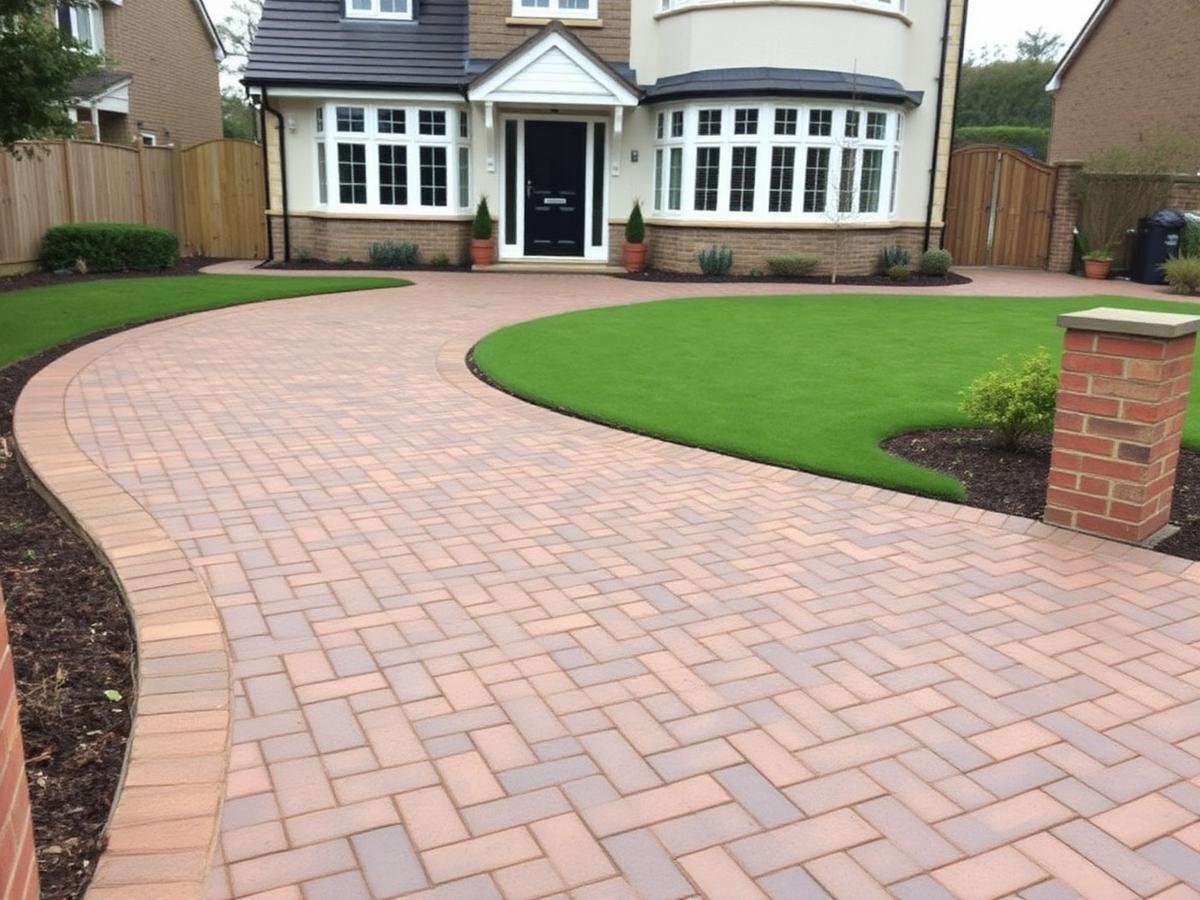
Clay-red block paving on a 1990s cul-de-sac estate
The newer cul-de-sac estates on the edges of Pontefract, away from the older stone core, are almost universally laid with clay-red block paving on the drives. It's a consistent surface type across whole streets, which makes uneven cleaning immediately obvious if only part of a drive gets attention.
Uniform block-paved drives on the newer estate roads
The newer cul-de-sac estates on the edges of Pontefract, away from the older stone core, are almost universally laid with clay-red block paving on the drives. It's a consistent surface type across whole streets, which makes uneven cleaning immediately obvious if only part of a drive gets attention.
These drives are used daily for two cars each, often with a shared visitor bay or turning head nearby, so tyre lines and oil drip patterns build up in predictable spots. Black organic staining tends to concentrate in the joints rather than on the block faces themselves, especially where the drive sits in partial shade from a neighbouring fence or garage.
Because the paving is relatively young compared with the town's older stone surfaces, the goal here is usually restoring even colour across the whole drive rather than dealing with structural wear.
Checking the paving before the rotary head touches it
Joint sand level
We check how much jointing sand remains before running the rotary head, since low sand levels need a lighter pass to avoid destabilising blocks.
Oil drip zones
Parking spots are checked for oil staining that needs pre-treatment before the rotary pass, rather than relying on rotation alone.
Drainage fall direction
We confirm which way the drive falls so cleaning water is worked with the gradient, not against it.
Getting kit in, getting water away
Most estate drives here fit two cars, so we ask for both to be moved for the visit, with the rotary cleaner needing a clear sweep across the full width rather than working around parked vehicles. Shared driveways with a neighbour need a quick conversation about timing so both households aren't blocked at once.
Estate drives are typically laid with a slight fall toward a road gulley or a permeable jointing system feeding a soakaway beneath, so the rotary head is worked to avoid forcing sand out of joints faster than the base can be topped back up.
- Main route in
- A1(M) J32 / A645
- Nearest city
- Wakefield — 8 miles
- Typical surfaces
- sandstone flags and clay-red block paving
- Common property stock
- stone terrace, post-war semi, modern estate home
- Nearest commercial hub
- Pontefract Market Place and Pontefract Park retail
- Area type
- market town
What shapes the visit on these estates
Before we start
- Both cars need to be off the drive for full-width access.
- Shared drives need timing agreed with the neighbouring household.
- Low joint sand means a lighter pass to protect block stability.
Once it's done
- Dry weather afterwards helps new jointing sand settle properly.
- Aftercare: keep vehicles off freshly re-sanded joints for a short settling period.
Working an estate drive with a rotary cleaner
- Step 1
Pre-treat isolated stains
Oil or tyre marks get spot-treated before the rotary head covers the wider area.
- Step 2
Even rotary pass
The whole drive is worked in overlapping passes so colour restoration is uniform edge to edge.
- Step 3
Joint sand top-up
Any joints stripped bare during cleaning are refilled with kiln-dried sand before we finish.
Scope agreed before anything is switched on
- We survey the surface first and say plainly if rotary surface cleaning is the wrong call for it.
- Scope is written down, so you can see exactly what is and isn't included.
- Where a stain or defect won't fully clear, we say so before you book.
Estate block paving questions
Will rotary cleaning strip all the sand from my joints?+
Not if we check sand levels first and adjust pressure; any sand that does come out is topped back up before we leave.
Can you do just my side of a shared drive?+
It's usually better to do the full drive together for even colour, but we can discuss splitting if needed.
Why is my drive patchy in colour even though it's not that old?+
Uneven shade and drip patterns from parked cars cause localised staining well before the paving itself ages.
How long before I can park back on the drive?+
Generally the same day once surface water has gone, though freshly topped joints benefit from a short settling period first.
See how sealing after cleaning helps protect Pontefract's estate driveways below.
If your estate drive is looking patchy compared with next door, get in touch and we'll arrange a rotary clean that restores even colour across the whole surface.
The short version
Estate block paving needs an even, full-width rotary pass with joint sand carefully managed, not a spot clean.