
Soft Washing Farmhouse Courtyards Near Wetherby
Rural farmhouse courtyard off the A661 with mature trees overhead
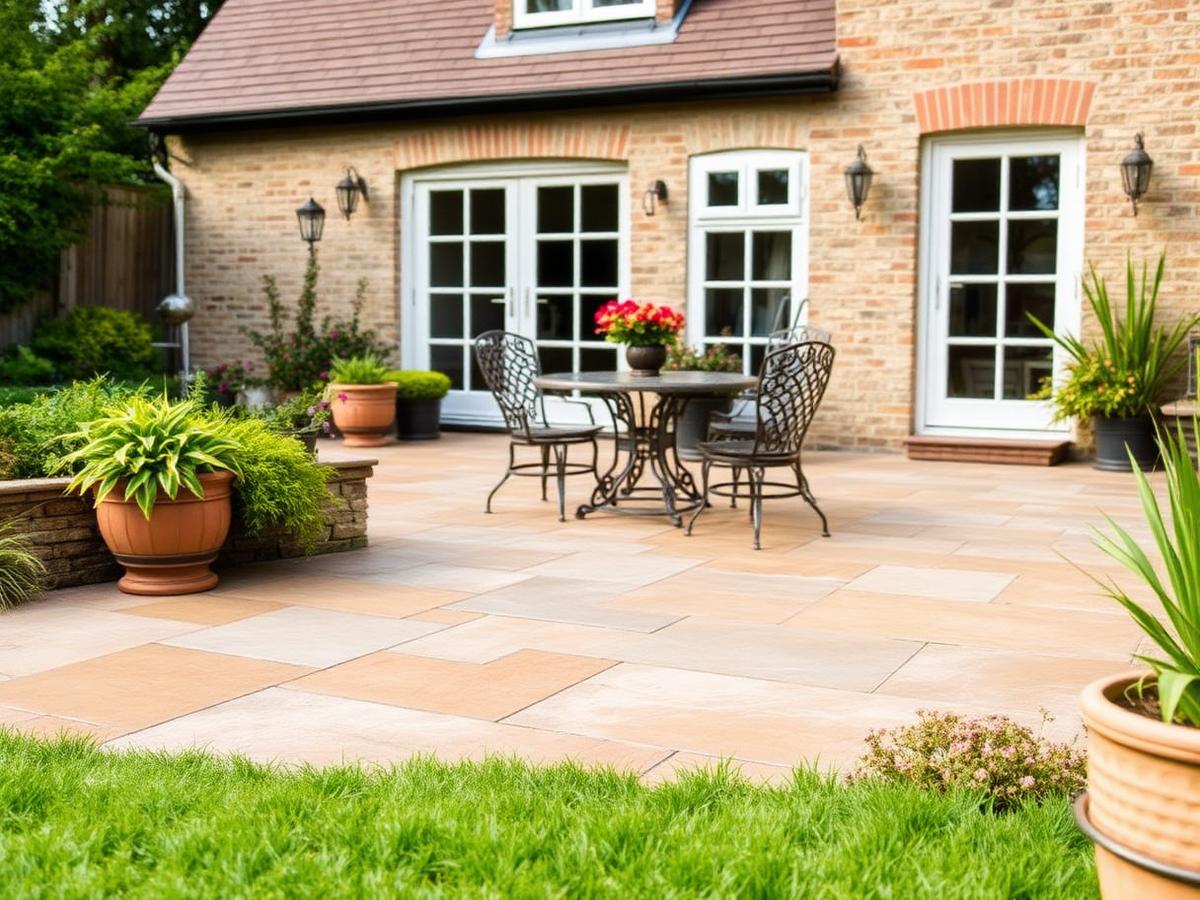
Out along the lanes toward Collingham and Linton, the farmhouses and barn conversions that dot the LS22 countryside tend to sit behind mature hedgerows and old field trees, the kind that were already decades old when the barns were still working buildings. That canopy is lovely in summer but it means courtyards rarely get direct sun for more than a few hours a day, and damp lingers on the flags long after the rain has stopped.
A courtyard shaded by old field trees
Out along the lanes toward Collingham and Linton, the farmhouses and barn conversions that dot the LS22 countryside tend to sit behind mature hedgerows and old field trees, the kind that were already decades old when the barns were still working buildings. That canopy is lovely in summer but it means courtyards rarely get direct sun for more than a few hours a day, and damp lingers on the flags long after the rain has stopped.
The paving in these courtyards is usually a mix of old stone flags laid decades ago and newer block paving added when a barn was converted, which means two different surfaces sitting side by side with very different tolerances for pressure and chemical strength.
Because these properties often sit some distance from the nearest neighbour, access for a soft-wash rig is usually straightforward, but water source and disposal of run-off need more thought than on a town street with a mains gully close by.
How a soft-wash visit unfolds
- Step 1
Low-pressure biocide application
The solution is applied at low pressure across the whole courtyard, working from the shaded end toward the sunnier side.
- Step 2
Dwell time under cover
We leave the treatment to work without rinsing, checking weather conditions so it isn't washed away by rain before it's had time to act.
- Step 3
Spot rinse on high-traffic paths
Only the paths people actually walk get a light rinse afterwards; the rest is left to die back naturally over following days.
Reading the growth before treating it
Moss root depth
We check how far moss has established into joints, since deeply rooted growth needs a longer dwell time than surface algae.
Shade pattern across the courtyard
Mapping which areas get sun helps predict where regrowth will return fastest after treatment.
Surface mix and porosity
Old flags and newer block paving take biocide differently, so each zone is assessed and treated as its own area.
What affects timing out here
Before we start
- Best scheduled in a dry spell of several days given the shade here
- Pets and children kept off treated areas until the solution has dried
- Old flags near tree roots checked for movement before treatment
Once it's done
- Visible dieback takes one to two weeks, not an instant change
- Autumn leaf-fall from the old trees means a second light treatment may suit some courtyards
Getting kit in, getting water away
Most farmhouse courtyards have generous turning space for a van, but gateways can be narrow with cattle grids or old timber gates that need opening carefully. Livestock or family pets on site mean we agree a plan for keeping gates shut during the visit.
Run-off on these rural courtyards often heads to a soakaway or a ditch along the lane rather than a mains drain, so biocide concentration and application rate are calculated with that in mind, and we avoid working during or just before heavy rain forecasts.
- Local authority
- Leeds City Council
- County
- West Yorkshire
- Main route in
- A1(M) J46 / A661
- Nearest city
- Leeds — 13 miles
- Typical surfaces
- magnesian limestone flags and clay-red block paving
- Common property stock
- Georgian townhouse, stone-built villa, modern executive home
Compare this with our approach to barn conversion sites and biocide treatment elsewhere on our Wetherby pages.
Scope agreed before anything is switched on
- We survey the surface first and say plainly if soft washing is the wrong call for it.
- Scope is written down, so you can see exactly what is and isn't included.
- Where a stain or defect won't fully clear, we say so before you book.
Questions from farmhouse owners
Why does moss keep coming back in the same spot?+
It's almost always down to shade from the tree canopy; we can treat it repeatedly but the underlying light levels won't change.
Is soft washing safe near my chickens or dogs?+
We ask that animals are kept off treated surfaces until fully dry and will time the visit around your routine where we can.
Will this work on both my old flags and the new block paving?+
Yes, but we treat them as separate zones since the older stone is more porous and takes the solution differently.
How long before I see a difference?+
Expect gradual dieback over one to two weeks rather than an immediate change on the day.
If your farmhouse courtyard near Wetherby is holding onto green shade year-round, ask us about a soft-wash visit suited to your particular mix of stone and paving.
The short version
Shaded rural courtyards around Wetherby need patient biocide treatment rather than quick pressure, given the tree cover and mixed surfaces.