Block Paving Sealing for Driveways Near the A650, Bingley
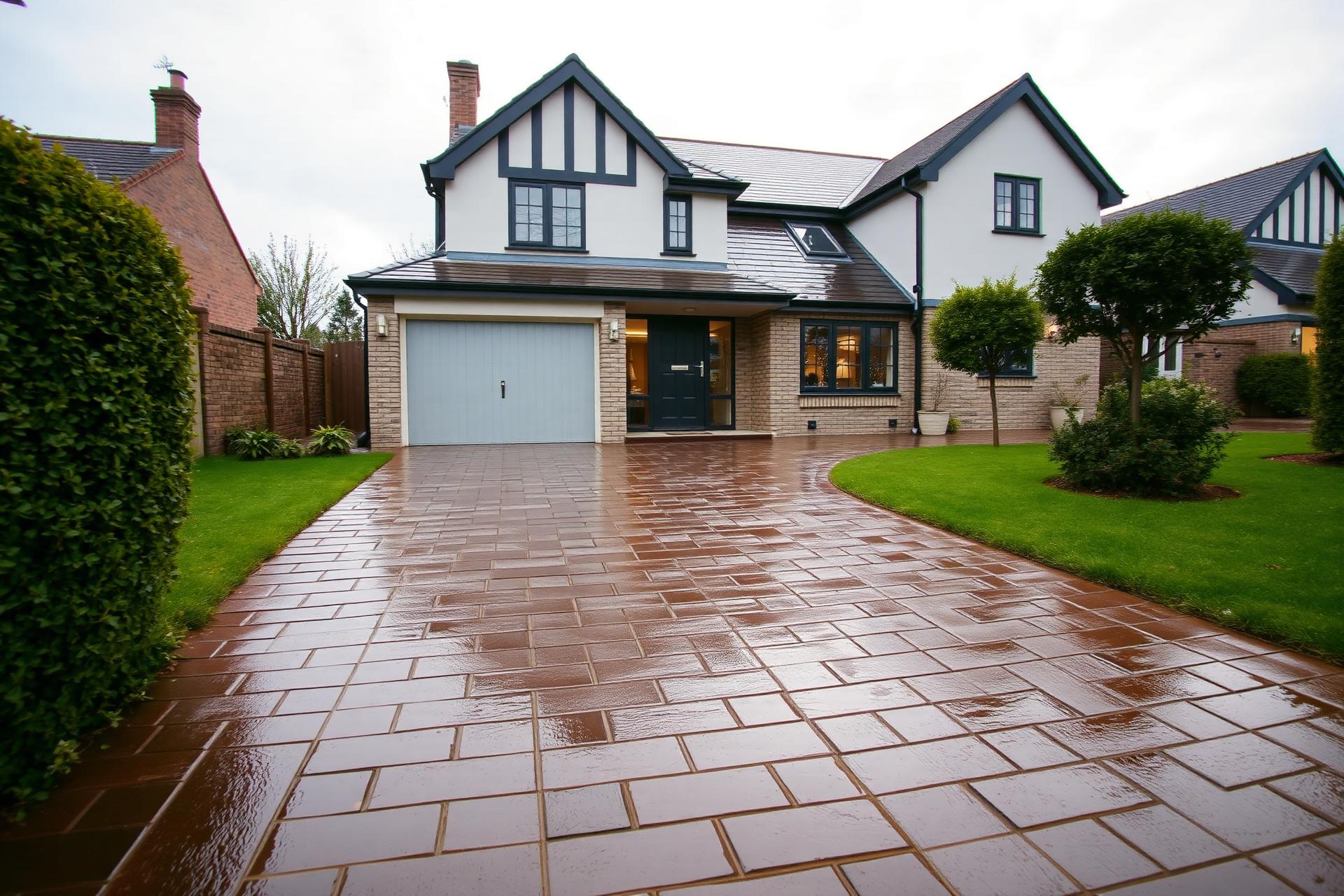
Buff-toned setts on a new estate driveway near the A650 roundabout
The estate driveways built along the approach to the A650 roundabout are almost universally finished in buff-toned block paving, chosen for its neutral match to the brick used across these developments. Being close to a busy road junction, though, means a steady film of traffic grime settles on the surface faster than in quieter cul-de-sacs further from the main road.
Why estate driveways here dull faster than expected
The estate driveways built along the approach to the A650 roundabout are almost universally finished in buff-toned block paving, chosen for its neutral match to the brick used across these developments. Being close to a busy road junction, though, means a steady film of traffic grime settles on the surface faster than in quieter cul-de-sacs further from the main road.
Owners often notice the buff colour fading toward grey within a couple of years, which is less about the block quality and more about untreated porous paving absorbing airborne diesel particulate and general road dirt.
Because these driveways are used daily for commuting vehicles, any sealing work has to fit around a household's need to still park that evening or the next morning.
Factors that affect the result
Before we start
- Driveway needs to stay vehicle-free for the sealant's full cure time
- Diesel and fuel staining should be treated before sealing, not after
- A breathable sealer is essential where permeable paving handles drainage
Once it's done
- Sealing should follow a full clean, not be applied over existing dirt
- Reapplication timing depends on traffic volume and road-facing exposure
How the sealing visit is run
- Step 1
Full clean and dry-out period
The driveway is cleaned thoroughly and left to dry completely, since sealant applied to residual moisture won't cure properly and can cloud.
- Step 2
Breathable sealer application
A permeable, breathable sealant is applied evenly across the full driveway, chosen specifically to preserve the block paving's drainage function.
- Step 3
Edge and border finishing
Edging blocks and any border courses are finished carefully by hand, since these areas often show wear first and benefit from slightly more attention.
Getting kit in, getting water away
Driveways here are typically open-fronted with easy road access, so the main planning point is confirming with the household how long the drive needs to be kept clear, since sealant requires proper curing time before vehicles return.
These estate driveways are generally laid with permeable jointing intended to let water through to a sub-base rather than to a surface gully, so sealant choice matters — a breathable sealer is used to preserve that drainage function rather than one that would seal the joints solid.
- Common property stock
- stone-built cottage, canal-side conversion, 1930s semi
- Nearest commercial hub
- Bingley Main Street and Crossflatts industrial estate
- Area type
- market town
- Postcode district
- BD16
- Local authority
- City of Bradford MDC
- County
- West Yorkshire
What we check before sealing
Existing sealant check
The surface is tested to see whether a previous sealer is already present and failing, since old coatings need removing before a fresh one can bond properly.
Joint sand condition
Sand levels in the joints are checked and topped up where needed before sealing, since sealing over gapped joints locks in the problem rather than fixing it.
Staining and diesel residue
Any dark patches from parked vehicles are identified so they can be treated ahead of sealing rather than sealed in permanently.
Scope agreed before anything is switched on
- We survey the surface first and say plainly if block paving sealing is the wrong call for it.
- Scope is written down, so you can see exactly what is and isn't included.
- Where a stain or defect won't fully clear, we say so before you book.
See our rotary surface cleaning page for how these driveways are prepared before sealing.
Questions estate homeowners ask
Will sealing stop my driveway fading to grey?+
It significantly slows the fading caused by absorbed road grime, since the sealed surface resists particulate soaking into the block.
How long do I need to keep cars off after sealing?+
Enough time for full cure, which we'll confirm on the day depending on conditions — parking too soon can mark the fresh coating.
Will sealing block the drainage in my paving?+
No, we use a breathable sealer specifically so water can still pass through the joints to the sub-base as designed.
Do I need to reseal every year?+
Driveways facing a busy road like the A650 tend to need more frequent reapplication than a quieter cul-de-sac drive.
Bottom line
Block paving sealing protects buff-toned estate driveways near the A650 from the fading caused by road grime.