
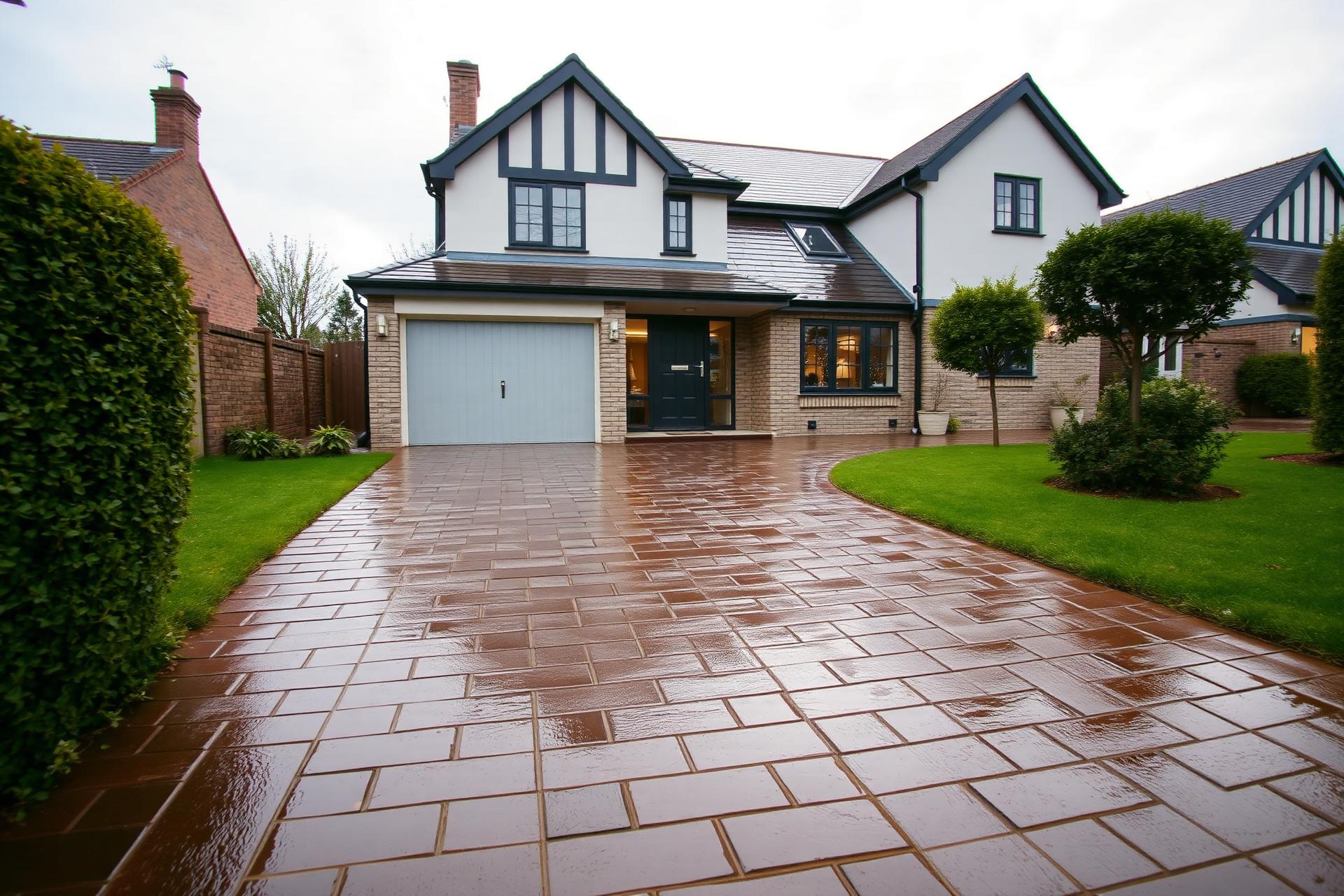
Block Paving Sealing for Shipley's Newer Cul-de-Sac Driveways
Modern cul-de-sac driveway laid within the last decade needing its first seal
The modern cul-de-sacs built at the edges of Shipley over the last decade or so typically came with a block-paved driveway as standard, laid with consistent, factory-coloured blocks that looked sharp on completion but have since faded slightly under a few years of sun and traffic.
First-time sealing on Shipley's newer estate driveways
The modern cul-de-sacs built at the edges of Shipley over the last decade or so typically came with a block-paved driveway as standard, laid with consistent, factory-coloured blocks that looked sharp on completion but have since faded slightly under a few years of sun and traffic.
Because these driveways are relatively young, many haven't been sealed at all since the original installation, meaning jointing sand has slowly started washing out at the edges nearest the road, and the surface colour has dulled unevenly where cars sit most often.
With driveways in these estates often visible from the street in a fairly uniform row of similar houses, a well-sealed drive with crisp, even colour tends to stand out clearly against a neighbour's faded, unsealed equivalent.
What to expect during and after sealing
Before we start
- Vehicles need to stay off the drive for the full curing period specified for the product used
- Weather forecasts are checked to avoid rain interrupting the curing process
- Sealing evens out sun-faded patches but won't fully restore original factory colour on very worn blocks
Once it's done
- Jointing sand should be topped up before sealing, not after
- A first-time seal on a young driveway generally gives a sharper result than sealing over old, ingrained grime
How the sealing visit is carried out
- Step 1
Cleaning and drying the full surface first
The driveway is thoroughly cleaned and given time to dry completely, since sealant applied over residual moisture won't bond properly.
- Step 2
Topping up jointing sand where needed
Any low or washed-out joints are refilled with fresh sand before sealant goes down, locking the blocks together as part of the same visit.
- Step 3
Applying sealant in even, controlled coats
Sealant is applied in measured coats across the whole drive, working in sections to keep the finish consistent from the garage to the road.
Getting kit in, getting water away
Estate driveways here are usually a single, open run without gates or steps, making access straightforward, though residents are asked to keep vehicles off the drive for the full curing period since these households often rely on the drive as the only off-street parking available.
Sealant is applied to bind with the block surface rather than pool anywhere, and because most of these estate drives slope gently toward the road, any excess is worked in before it can travel toward the roadside gully or a neighbouring drive.
- Common property stock
- stone-built terrace, canal-side conversion, post-war semi
- Nearest commercial hub
- Shipley town centre and Salts Mill retail
- Area type
- suburb
- Postcode district
- BD18
- Local authority
- City of Bradford MDC
- County
- West Yorkshire
What we check before sealing a block-paved drive
Checking jointing sand levels
We assess how much sand remains between the blocks, topping up any low joints before sealing so the sealant properly locks the sand in rather than sealing over gaps.
Testing surface porosity
Blocks that have never been sealed absorb sealant differently to previously treated ones, so a test patch confirms how the coverage will look once cured.
Assessing colour fade patterns
Sun-faded areas near the road are compared against shadier sections closer to the house to judge how much the sealant will even out the colour difference.
Scope agreed before anything is switched on
- We survey the surface first and say plainly if block paving sealing is the wrong call for it.
- Scope is written down, so you can see exactly what is and isn't included.
- Where a stain or defect won't fully clear, we say so before you book.
See rotary surface cleaning and new build estate pages for related work on similar driveways.
Sealing questions from newer estate homeowners
Our drive is only a few years old — is sealing worth it yet?+
Yes, sealing now while the blocks are in good condition helps protect the colour and locks jointing sand in before it starts washing out further.
How long before we can park on it again?+
This depends on the product and weather, but you'll need to keep vehicles off for the specified curing period, which we'll confirm on the day.
Will sealing make our faded blocks look new again?+
It significantly improves and evens out colour, though very worn areas may not return fully to their original factory shade.
Does sealing stop weeds coming up between the blocks?+
It reduces the conditions weeds need to establish in the joints, particularly once jointing sand has been topped up as part of the job.
The short version
First-time sealing that protects colour and jointing sand on newer estate driveways around Shipley.