
Block Paving Sealing for Titus Street Driveways in Saltaire
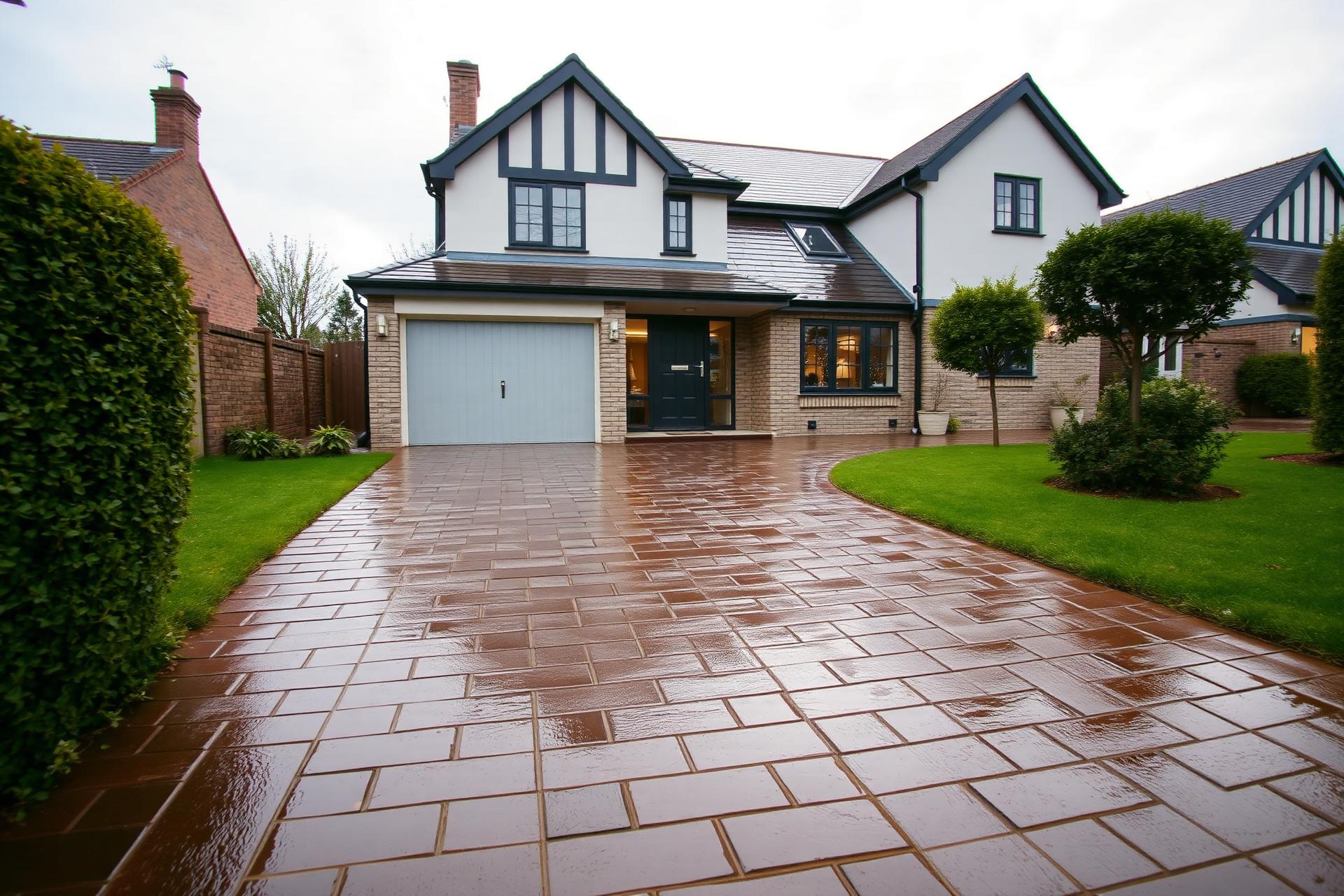
Block-paved driveway on a later infill property off Titus Street
Not every property in Saltaire sits on original mill-worker stone; several later infill homes around Titus Street were built with modern block-paved driveways rather than flagstone. These blocks have the opposite problem to the heritage stone nearby — instead of being irreplaceable, they're vulnerable to fading, weed intrusion between joints and the same canal-corridor damp that plagues the older streets.
Why infill driveways near Titus Street need sealing attention
Not every property in Saltaire sits on original mill-worker stone; several later infill homes around Titus Street were built with modern block-paved driveways rather than flagstone. These blocks have the opposite problem to the heritage stone nearby — instead of being irreplaceable, they're vulnerable to fading, weed intrusion between joints and the same canal-corridor damp that plagues the older streets.
Because these drives are relatively modern, owners often expect a level of finish closer to when the blocks were first laid, which sealing genuinely helps maintain rather than just cleaning alone.
The proximity to the canal and the surrounding hills means these driveways catch more standing damp overnight than an equivalent drive further out in open Bradford suburbs, encouraging both moss in the joints and colour loss in the blocks themselves.
What affects how long the seal lasts here
Before we start
- Sealant should be applied in a dry spell to cure properly before rain returns
- Permeable sealants are used to keep the drive's drainage function intact
- Vehicles need to stay off the surface for a set curing period
Once it's done
- Re-sanding joints beforehand extends how well the seal performs
- Canal-corridor damp means resealing intervals may be shorter than drier inland areas
How the sealing application is carried out
- Step 1
Full clean and joint preparation
The block surface is cleaned and joints cleared of weeds and debris before any sealant goes down, since sealing over existing growth traps rather than solves the problem.
- Step 2
Joint sand replenishment
Where sand has washed out over time, joints are topped up before sealing to keep the interlocking structure of the blocks sound.
- Step 3
Even sealant application in sections
The sealant is applied in manageable sections working away from the exit point, allowing consistent coverage without stepping back over wet areas.
Getting kit in, getting water away
These infill driveways typically allow direct vehicle access from the street, though some share a dropped kerb with a neighbouring property, so scheduling avoids blocking joint access during the sealing and curing period.
Block-paved drives here are usually laid with permeable jointing intended to let water pass through to a sub-base rather than running off to a surface drain, so sealing products are chosen specifically to preserve that permeability rather than closing the surface off.
- Common property stock
- Grade II stone terrace, mill-worker cottage, canal-side conversion
- Nearest commercial hub
- Salts Mill and Victoria Road boutiques
- Area type
- heritage village
- Postcode district
- BD18
- Local authority
- City of Bradford MDC
- County
- West Yorkshire
What we check on block paving before sealing
Existing joint sand and weed presence
We check how much material has washed or grown out of the joints, since this affects whether re-sanding is needed before sealing can be applied properly.
Surface fade and previous sealant residue
Some driveways carry a partially failed sealant from a previous application, which needs identifying so it can be addressed rather than sealed straight over.
Sub-base drainage performance
We assess whether water is still passing through the joints properly or pooling on the surface, which tells us whether a permeable sealant is even doing its job currently.
Scope agreed before anything is switched on
- We survey the surface first and say plainly if block paving sealing is the wrong call for it.
- Scope is written down, so you can see exactly what is and isn't included.
- Where a stain or defect won't fully clear, we say so before you book.
See related sealing approaches used across Shipley and Bingley driveways.
Questions about sealing block paving in Saltaire
Will sealing stop water draining through our block paving?+
We use permeable sealants specifically so the joints keep functioning as intended rather than turning the surface impermeable.
How long before we can park on the drive again?+
The sealant needs a set curing period undisturbed, which we'll confirm on the day based on conditions and product used.
Our blocks have faded — will sealing bring the colour back?+
Sealing can restore some depth of colour and slow further fading, though it won't fully reverse long-term UV bleaching on very worn blocks.
Do weeds in the joints need dealing with first?+
Yes, joints are cleared and, where needed, re-sanded before sealing so growth isn't simply trapped underneath.
The short version
Sealing protects Saltaire's newer block-paved infill driveways against fade, weed growth and canal-corridor damp.