
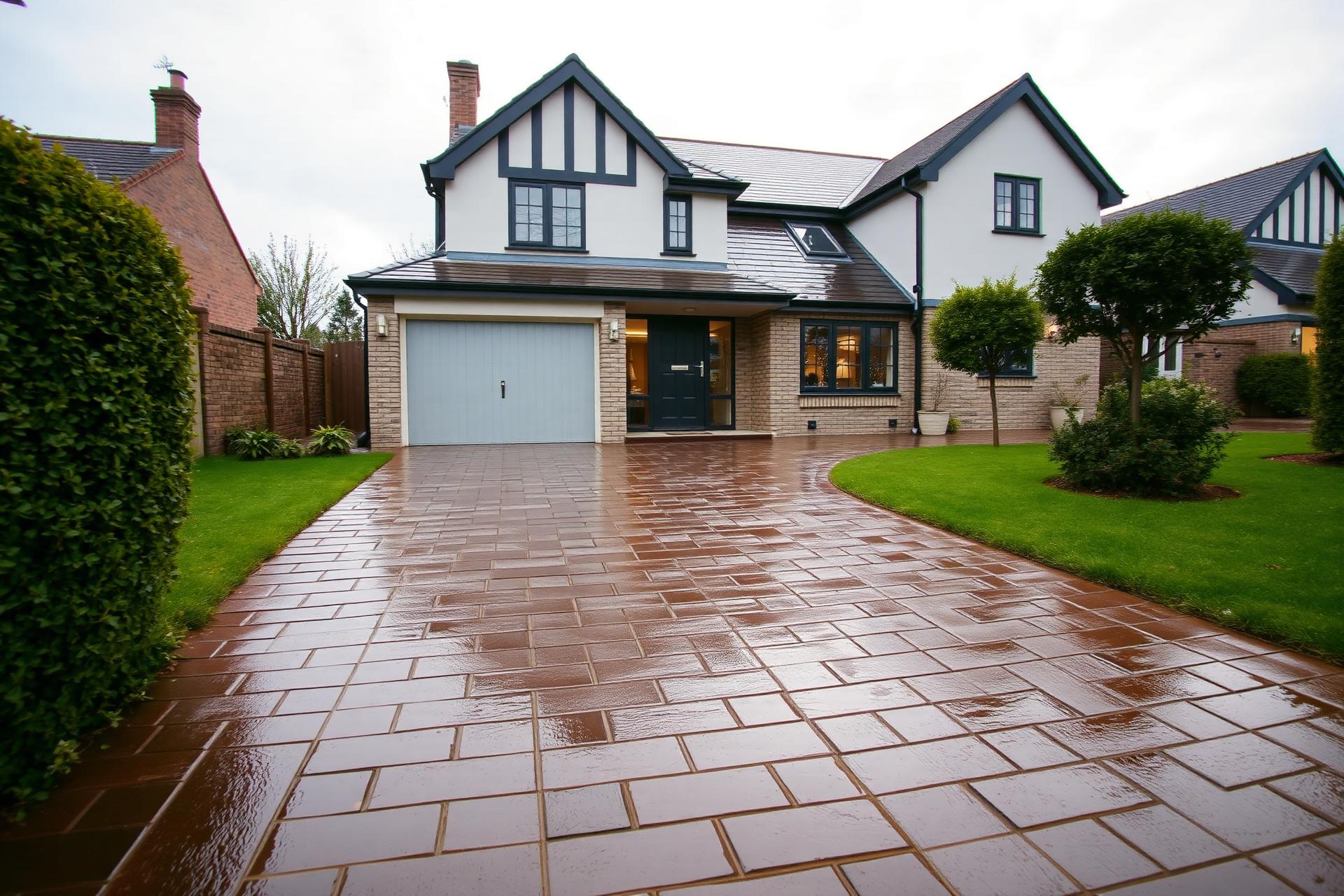
Block Paving Sealing for Guiseley Cul-de-Sac Drives
Recently re-laid block paving drive on a commuter cul-de-sac near the A65
Block paving is the dominant driveway surface on Guiseley's commuter cul-de-sacs, and once a drive has been properly cleaned, the joints and block surface are left more exposed than before — clean, but with the protective layer that once slowed dirt penetration now gone. Left unsealed, these drives pick up road grime from the nearby A65 corridor again within months rather than years.
Why freshly cleaned block paving in Guiseley needs sealing
Block paving is the dominant driveway surface on Guiseley's commuter cul-de-sacs, and once a drive has been properly cleaned, the joints and block surface are left more exposed than before — clean, but with the protective layer that once slowed dirt penetration now gone. Left unsealed, these drives pick up road grime from the nearby A65 corridor again within months rather than years.
A sealed surface behaves very differently under the daily in-and-out of commuter traffic. Sealer binds the jointing sand in place, resists oil and diesel penetration at the point of contact, and makes future cleaning considerably easier because grime sits on top of the sealed layer rather than working into the block itself.
Because so many of these drives back onto shared boundary fences and narrow verges, keeping the surface protected also reduces how often disruptive cleaning work is needed at all.
Timing and aftercare points
Before we start
- Sealing works best in mild, dry weather rather than during a cold snap or ahead of forecast rain.
- Vehicles should stay off the drive for the full curing period, which can mean planning parking elsewhere for a day.
- A wet-look sealer darkens block colour noticeably; a matt option keeps the look closer to unsealed paving.
Once it's done
- Sealed block paving still needs occasional cleaning, just less frequently than an unsealed surface.
- Reapplication is typically needed every few years depending on traffic and weather exposure.
How sealing is carried out after a clean
- Step 1
Final joint preparation
Jointing sand is topped up and brushed level across the whole drive before any sealer is applied, giving the sealer a stable base to bind.
- Step 2
Even sealer application
Sealer is applied in controlled sections working away from the garage or house toward the road, so no one crosses wet sealer while the rest is completed.
- Step 3
Curing time before vehicle use
The drive is left closed to vehicles for the manufacturer-recommended curing period, which we confirm on site depending on temperature and humidity that day.
Getting kit in, getting water away
Sealing needs the drive fully clear and closed to vehicle use for the application and curing period, which on a single-drive cul-de-sac plot usually means coordinating with the household's own parking needs rather than neighbours. Narrow gateposts on some of these 1970s-built plots limit equipment size, so hand application is often used rather than a wide sprayer.
Sealer is applied only once the surface is fully dry and free of standing water, and we avoid application before forecast rain, since a fresh sealer coat needs time to cure before it can handle run-off toward the road gully most of these drives drain to.
- Common property stock
- 1930s semi, modern detached, 1970s estate home
- Nearest commercial hub
- Guiseley retail park and Otley Road
- Area type
- commuter village
- Postcode district
- LS20
- Local authority
- Leeds City Council
- County
- West Yorkshire
What we check before applying sealer
Surface dryness throughout the block depth
We check moisture isn't just gone from the top of the blocks but has cleared from the joints too, since sealing over damp jointing traps moisture underneath.
Jointing sand levels post-clean
Any sand lost during cleaning is topped up before sealing, since sealer applied over thin joints won't properly bind the sand that's left.
Sealer type suited to the block colour
Some sealers enhance colour more than others; we check what finish the household wants before choosing between a matt and a wet-look product.
Scope agreed before anything is switched on
- We survey the surface first and say plainly if block paving sealing is the wrong call for it.
- Scope is written down, so you can see exactly what is and isn't included.
- Where a stain or defect won't fully clear, we say so before you book.
See our related methods for preparing block paving before sealing around Guiseley.
Questions about sealing block paving in LS20
Does sealing stop weeds growing between the blocks?+
Sealing bound joints makes it considerably harder for weed seeds to establish, though it isn't a total guarantee if seeds land in a gap that's opened up over time.
How long before we can park on the drive again?+
This depends on temperature and the specific sealer used, but we'll give you an exact curing window on the day based on conditions.
Will sealing change the colour of our block paving?+
A wet-look sealer will darken and enhance colour noticeably; a matt sealer keeps the finish much closer to how the blocks look when dry and unsealed.
Can sealing be done straight after cleaning?+
Yes, provided the surface and joints are fully dry first — sealing straight after a clean is usually the most efficient way to protect the freshly cleaned surface.
The short version
Sealing locks in jointing sand and colour on Guiseley's commuter block-paved drives, slowing how fast road grime returns.