
Block Paving Sealing on Rawdon Estate Driveways
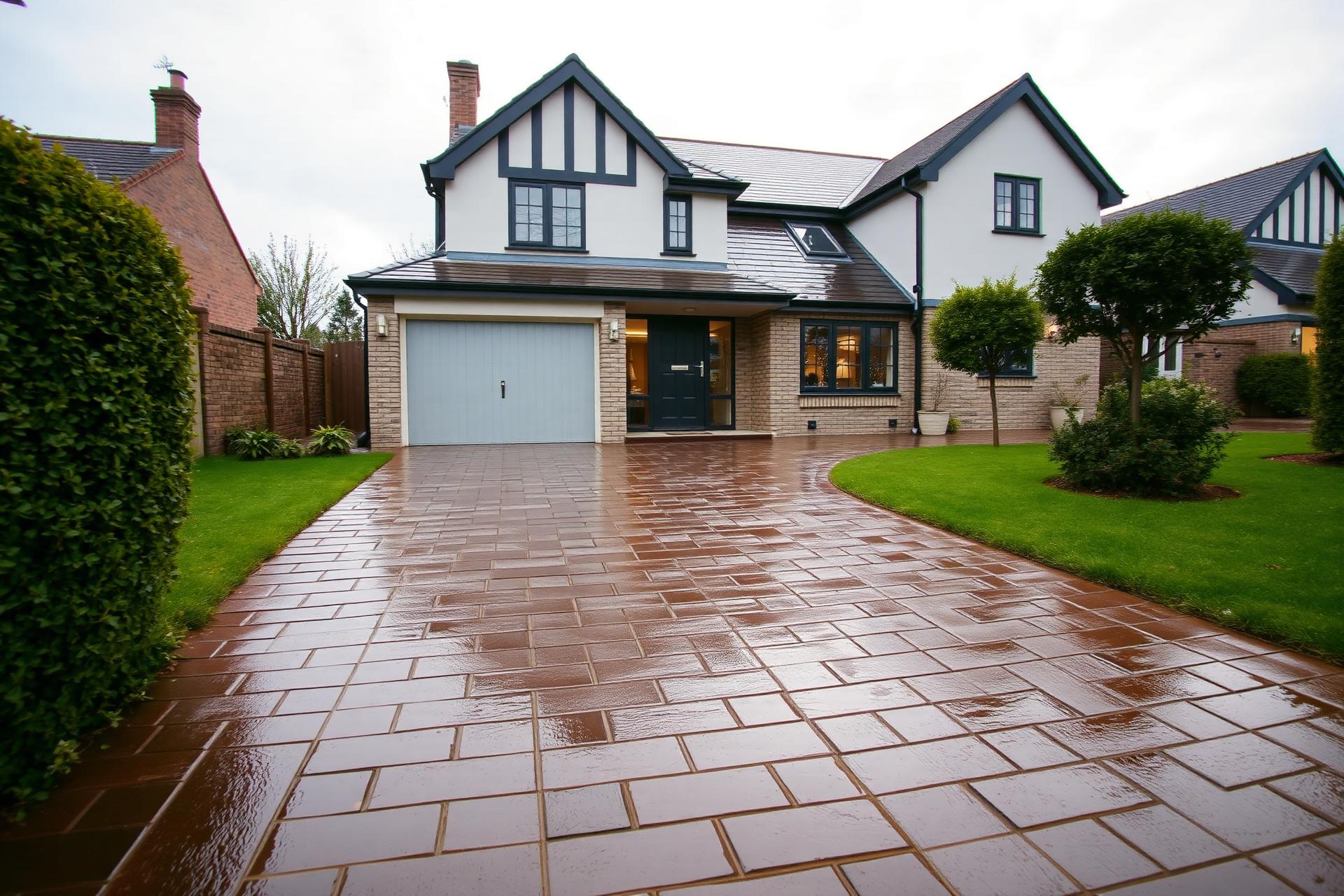
Two-car block paving drive on a modern estate close
The estate closes rising toward Larkfield have block-paved driveways still relatively young compared to Rawdon's older villa stock, but daily two-car use means oil drips and joint sand loss show up faster than homeowners expect. Sealing after a proper clean addresses both issues at once, binding the joint sand in place while giving the block surface a layer that resists new oil marks soaking straight in.
Why sealing suits Rawdon's newer estate drives
The estate closes rising toward Larkfield have block-paved driveways still relatively young compared to Rawdon's older villa stock, but daily two-car use means oil drips and joint sand loss show up faster than homeowners expect. Sealing after a proper clean addresses both issues at once, binding the joint sand in place while giving the block surface a layer that resists new oil marks soaking straight in.
Because these estates sit along the A658 corridor with regular commuter traffic, road film and brake dust settle constantly, and an unsealed block surface absorbs that grime into its pores over time, gradually dulling the colour that was originally chosen to match the estate's uniform look.
Many of these driveways also have a contrasting border course, and sealing evenly across both the main paving and the border keeps the colour distinction crisp rather than letting the two age at different visible rates.
Things worth knowing
Before we start
- Sealing works best on a driveway that's already had joint sand topped up.
- Vehicles need to stay off the surface for the sealant's curing period.
- Breezy conditions require managing overspray onto neighbouring drives.
Once it's done
- Contrasting border blocks may need separate sealant treatment.
- A fully dry surface is essential for sealant to cure properly.
How sealing is applied
- Step 1
Full clean and joint refresh
The driveway is cleaned and joint sand topped up before any sealant is considered, since sealing over loose joints wastes the treatment.
- Step 2
Even sealant application
Sealant is applied in controlled passes across the full surface, working methodically to avoid overlap lines.
- Step 3
Border-specific finish
Contrasting border blocks are sealed separately if needed to maintain their distinct colour tone.
Getting kit in, getting water away
Estate driveways typically offer straightforward access with no gates, though close-set neighbouring plots mean we're mindful of sealant overspray drift, particularly on a breezy day. We ask that vehicles stay off the drive for the recommended curing period after application, which needs planning around household routines.
These estates have formal gullies at the driveway's low point, and we confirm that drainage is clear and functioning before sealing, since the surface needs to be genuinely dry throughout for the sealant to cure properly rather than trap moisture underneath.
- Common property stock
- stone-built villa, 1930s detached, modern estate home
- Nearest commercial hub
- Rawdon Micklefield and Yeadon retail
- Area type
- suburb
- Postcode district
- LS19
- Local authority
- Leeds City Council
- County
- West Yorkshire
What we check before sealing
Joint sand level
We assess how much sand remains in the joints, topping up before sealing so the sealant properly locks it in place.
Surface dryness
Moisture readings are taken across the block surface, since sealant applied over damp paving won't cure correctly.
Border colour matching
We check whether the contrasting border needs a different sealant finish to preserve its visual distinction from the main paving.
Scope agreed before anything is switched on
- We survey the surface first and say plainly if block paving sealing is the wrong call for it.
- Scope is written down, so you can see exactly what is and isn't included.
- Where a stain or defect won't fully clear, we say so before you book.
Read our hot water cleaning page for pre-sealing preparation, or see patio sealing for garden surfaces.
Sealing questions from estate homeowners
How long do I need to keep cars off the driveway after sealing?+
The curing period varies by product, but we'll confirm the exact timeframe and plan around your household's parking needs.
Will sealing stop the oil marks from my car appearing?+
It significantly reduces how easily oil soaks into the block surface, making marks easier to clean off rather than fully preventing them.
Does sealing fix the joint sand that's washed out over time?+
We top up joint sand before sealing so the treatment locks a properly filled joint in place.
Can the border blocks be sealed a different colour to the main drive?+
Yes, we can treat contrasting border sections separately to preserve their distinct tone.
Recap
Sealing locks in joint sand and resists oil staining on Rawdon's newer estate block paving driveways.