
Block Paving Sealing for Yeadon's Estate Driveways
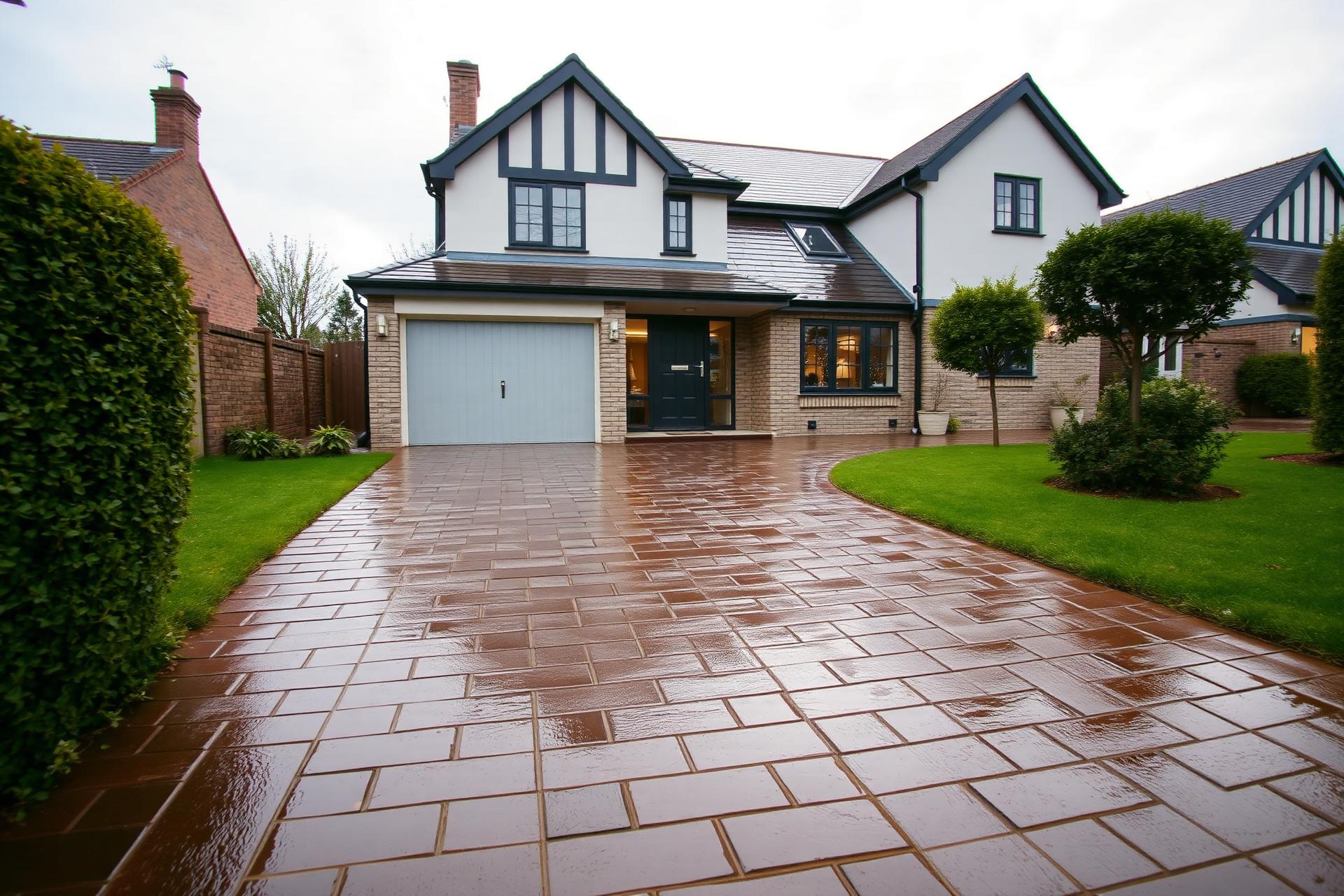
New driveway on the estate roads toward Rawdon needing joint stabilisation
The newer estate homes on the Yeadon side toward the Rawdon border mostly have block-paved driveways laid within the last couple of decades, and while the paving itself holds up well, the jointing sand between blocks is the first thing to erode under daily airport-belt grime and regular vehicle weight.
Why newer Yeadon estate drives benefit from early sealing
The newer estate homes on the Yeadon side toward the Rawdon border mostly have block-paved driveways laid within the last couple of decades, and while the paving itself holds up well, the jointing sand between blocks is the first thing to erode under daily airport-belt grime and regular vehicle weight.
Sealing at this stage locks that jointing sand in place and gives the block colour some protection against the fine diesel-tinged grime that settles across LS19 forecourts, meaning the drive keeps its original tone rather than dulling within a couple of years.
Some of the older back-to-back terraces near the centre have had block paving retrofitted over what was once a garden, and sealing these smaller forecourts is just as worthwhile, particularly given how close they sit to the road and its constant light dusting of grit.
Timing and conditions that affect the result
Before we start
- Sealing works best on a dry drive with settled weather forecast for the curing period.
- Jointing sand should be topped up before sealing, not after.
- Vehicles need to stay off the drive for the specified curing time.
Once it's done
- Airport-belt grime returns faster than in quieter areas, so a maintenance reseal cycle is worth planning for.
- Older, previously sealed drives may need a light strip before a fresh coat goes on.
How sealing is applied for lasting joint stability
- Step 1
Clean and dry first
A full clean and adequate drying time comes before any sealant, since moisture trapped underneath causes cloudy patches.
- Step 2
Joint sand top-up
Any depleted jointing sand is replaced before sealing, giving the sealant something stable to bind.
- Step 3
Even sealant application
Sealant is applied in controlled sections to avoid pooling or uneven sheen across the drive.
Getting kit in, getting water away
Estate driveways are generally wide and open, allowing sealant to be applied in even sweeps without needing to work around obstacles, though residents are asked to keep the drive clear and off it for the curing period specified. Smaller terrace forecourts need more careful edge work given their tighter dimensions and closer proximity to a front door.
Sealant is applied in dry, controlled conditions so it cures into the surface rather than washing off, and any excess is worked into the joints rather than left to pool, keeping the nearby road gully and any garden border free of sealant residue.
- Common property stock
- stone-built terrace, post-war semi, modern estate home
- Nearest commercial hub
- Yeadon town centre and airport business park
- Area type
- suburb
- Postcode district
- LS19
- Local authority
- Leeds City Council
- County
- West Yorkshire
What we look at before sealing block paving
Joint sand levels
Checking how much sand remains between blocks, since sealing over depleted joints without topping them up first won't stabilise the surface properly.
Surface cleanliness
Confirming the paving is fully clean and dry, as sealant applied over grime or damp locks the problem in rather than protecting against it.
Existing sealant condition
On previously sealed drives, checking whether the old coat has worn thin or patchy before deciding on a full strip or a fresh top-up.
Scope agreed before anything is switched on
- We survey the surface first and say plainly if block paving sealing is the wrong call for it.
- Scope is written down, so you can see exactly what is and isn't included.
- Where a stain or defect won't fully clear, we say so before you book.
Compare sealing options for other surfaces and site types across Yeadon.
Block paving sealing questions from Yeadon homeowners
Will sealing stop my joints losing sand so quickly?+
It significantly slows sand loss by locking it in place, though it doesn't make the joints entirely immune to wear from vehicle weight.
How soon can I park on the drive after sealing?+
You'll need to keep vehicles off for the curing period, which we'll confirm on the day based on conditions.
Does sealing help against the grime near the airport?+
Yes, a sealed surface is easier to keep clean and resists staining better than bare block paving in this kind of environment.
Can you seal my older forecourt near the town centre?+
As long as the block paving is sound and properly cleaned first, smaller forecourts seal just as well as larger estate drives.
The short version
Sealing locks in joint sand and colour on Yeadon's block-paved estate drives against airport-belt grime.