
Patio Sealing for Sloped Rear Gardens in Meanwood, Leeds
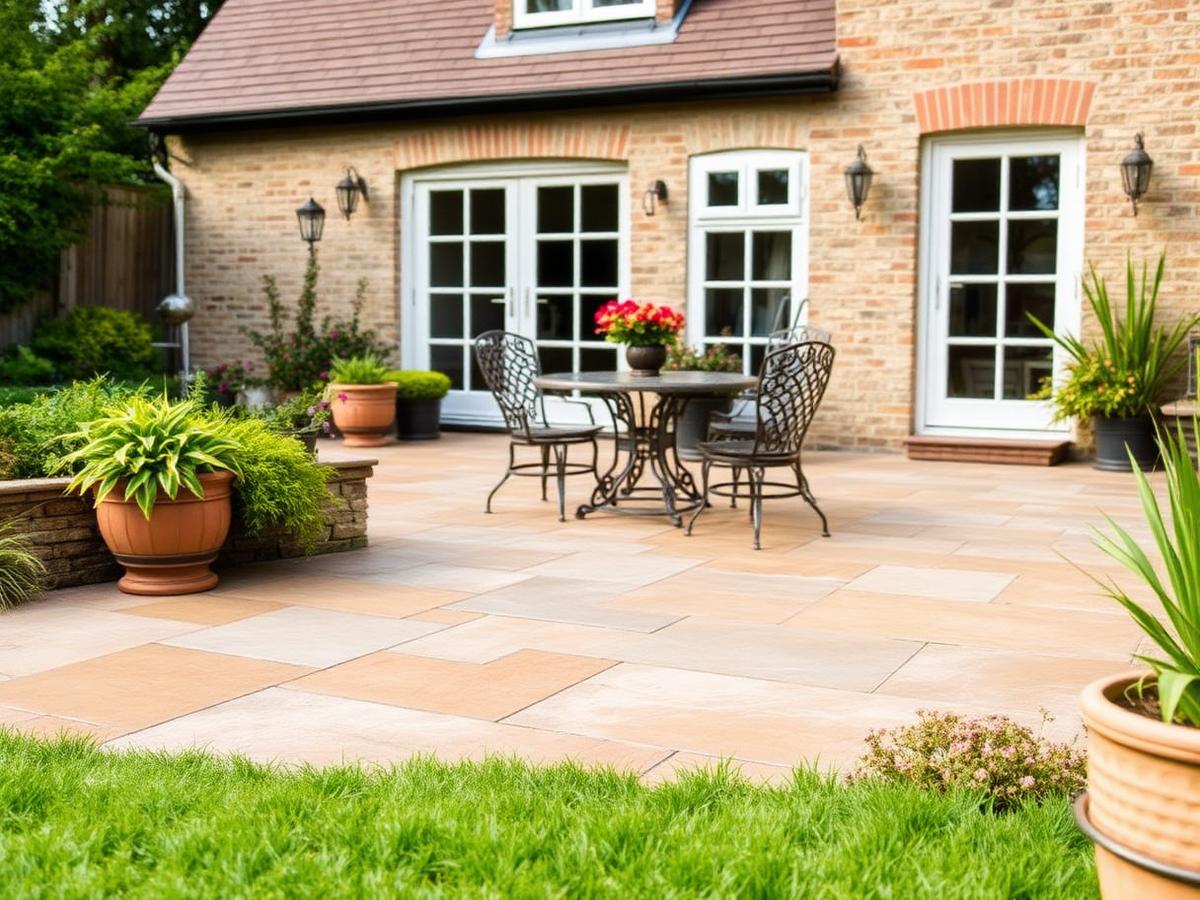
Raised rear patio terrace on a sloped Meanwood garden
Meanwood's terraced hillside streets mean many rear gardens step up sharply from the house, with a patio built as a levelled platform partway up the slope, often retained by a low wall or railway sleepers. Water naturally wants to move downhill across this kind of patio, which affects how evenly it dries and how sealant needs to be applied.
Raised patios built into Meanwood's hillside gardens
Meanwood's terraced hillside streets mean many rear gardens step up sharply from the house, with a patio built as a levelled platform partway up the slope, often retained by a low wall or railway sleepers. Water naturally wants to move downhill across this kind of patio, which affects how evenly it dries and how sealant needs to be applied.
These patios are frequently a mix of concrete flags and reclaimed stone laid at different points as the garden was developed over the years, meaning porosity and existing wear vary across a single surface more than on a flat, uniform patio.
Because the patio sits above the house's damp course level in many cases, there's also a retaining-wall interface to consider, where sealant shouldn't be allowed to pool or trap moisture against the wall base.
Sealing a stepped, multi-level patio correctly
- Step 1
Section-by-section prep
Each material type across the sloped patio is cleaned and prepared separately before sealant is matched to it.
- Step 2
Working from top of slope down
Sealant is applied starting at the highest point and working down, following the same direction water naturally moves.
- Step 3
Retaining edge finish
The lowest edge nearest the retaining wall gets a careful finish to avoid sealant pooling against the structure.
Reading a patio that sits on a slope
Mixed material identification
We identify where concrete flags meet reclaimed stone sections, since each takes sealant differently and needs separate product matching.
Retaining edge drainage
We check the low retaining wall or sleeper edge for existing weep points, ensuring sealant won't seal over a drainage route.
Slope-driven wear pattern
The lower edge of a sloped patio typically shows more wear and moisture staining than the upper edge, which guides where extra preparation is needed.
What slope changes about sealing
Before we start
- Mixed materials on one patio often need more than one sealant type
- Retaining wall drainage points must stay clear after sealing
- Material logistics take longer on gardens without side access
Once it's done
- Lower patio edges usually show more wear than upper sections
- Sealant applied in the direction of natural water flow lasts better
Getting kit in, getting water away
Getting materials up to a raised patio usually means carrying them by hand up garden steps rather than driving equipment to the working area, since these gardens rarely have side access wide enough for a trolley. This adds time to material logistics compared with a flat, street-facing patio.
Run-off and rainwater on a sloped patio naturally channel toward the lowest retaining edge, and confirming that edge has a working weep hole or gap for water to escape is part of preparing to seal. Sealing over a blocked drainage point can trap water against the retaining structure rather than letting it clear.
- Nearest commercial hub
- Leeds city centre and Thorpe Park business estate
- Area type
- city
- Postcode district
- LS1
- Local authority
- Leeds City Council
- County
- West Yorkshire
- Main route in
- M621 / A61
Sandstone sealing covers a similar approach where reclaimed stone dominates the surface.
Scope agreed before anything is switched on
- We survey the surface first and say plainly if patio sealing is the wrong call for it.
- Scope is written down, so you can see exactly what is and isn't included.
- Where a stain or defect won't fully clear, we say so before you book.
Questions about sealing on a hillside garden
Does the slope of my garden make sealing harder?+
It changes the approach rather than making it harder — we work from the top down and check the lower retaining edge drains properly.
My patio has different stone types in different sections — is that a problem?+
It just means matching sealant to each material rather than using one product across the whole surface.
How do you get materials up to a raised patio?+
Where there's no side access, materials are carried up by hand, which is factored into how the visit is planned.
Could sealing cause damp against my retaining wall?+
Only if drainage points are sealed over by mistake, which is exactly what we check for before finishing that edge.
If your Meanwood garden has a raised patio built into the slope, get in touch and we'll assess materials and drainage before sealing.
The short version
Sealing a sloped Meanwood patio means matching mixed materials and protecting retaining-wall drainage as water moves naturally downhill.