
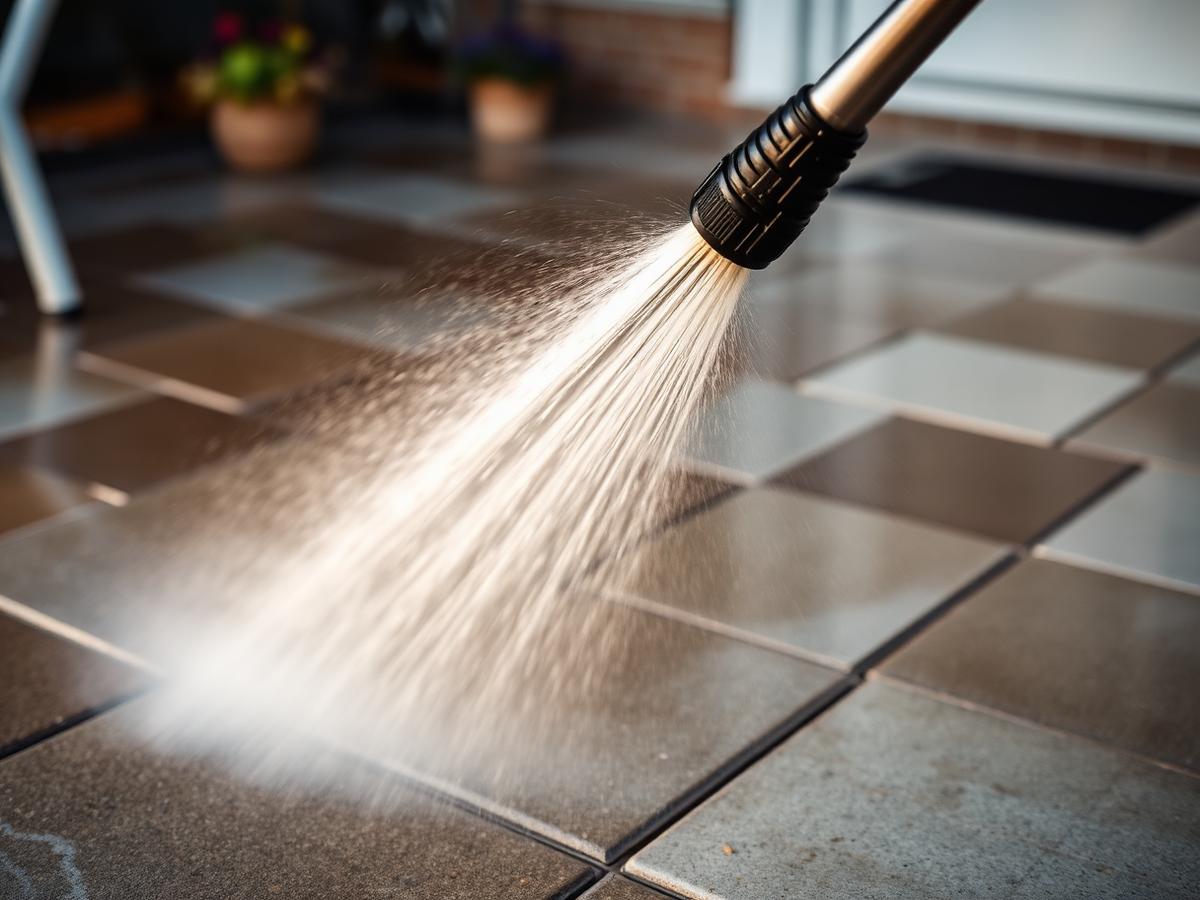
Composite decking is cleaned with a low-pressure soft wash, a brush worked along the grain and grooves, and a biocide treatment to deal with algae — not with a high-pressure lance held close to the boards. High pressure can scar the surface layer, raise fibres on older uncapped boards and leave permanent marks that no later clean will remove.
Composite boards don't rot like softwood, but they are not maintenance-free. Shaded decks in particular still go green and slippery, and grooves hold dirt and moisture. This guide covers what builds up, how a professional clean is done, and the common mistakes to avoid.
Why composite decking still gets dirty and slippery
Composite is a blend of wood fibre and plastic, often with a protective outer cap. The board itself resists water, but pollen, soil, leaf litter and airborne grime settle on the surface and in the grooves. In shade, where the deck never fully dries, that film feeds algae, and algae is what makes any deck slippery underfoot.
Barbecue grease, food spills and tannin from leaves or pots can also mark the surface. On older boards without a cap, the wood fibres near the surface can take up moisture and hold staining more readily than newer capped products.
How a professional clean is done
- Furniture, pots and planters are moved and the gaps between boards cleared of debris so water can drain.
- The surface is soft-washed at low pressure, keeping the nozzle moving and working along the length of the boards.
- Grooves are brushed and detailed with a lance at a safe distance and angle.
- An anti-slip biocide treatment is applied to kill the algae rather than just rinsing the green off.
- Grease or tannin marks are treated separately where they have been left behind.
What to avoid
- High pressure close to the boards — it can etch the cap, fur uncapped boards and leave visible stripes.
- Stiff wire brushes or abrasive pads, which scratch the surface.
- Oils and stains meant for timber; composite doesn't absorb them and they can leave a sticky film.
- Strong bleach, which can affect board colour and harms planting that drains off the deck.
- Leaving pots and mats in the same place all year, which traps moisture and marks the boards.
How composite differs from a timber deck
With softwood and hardwood, cleaning is often followed by an oil or stain top-coat to protect the timber and bring back its colour. Composite doesn't need that — the job is to clean it thoroughly and deal with the algae, then leave the board as it is.
Timber can also rot around fixings and needs checking for soft spots. Composite doesn't rot in the same way, but it's still worth checking the frame beneath, clips and board ends during a clean, because the substructure is usually treated timber.
Keeping it clean for longer
Regular sweeping, especially in autumn, stops leaf litter sitting in the grooves and staining. Clear the gaps between boards so water drains freely, trim back overhanging planting that keeps the deck in shade, and move pots and furniture occasionally.
A biocide-treated deck stays clear of green growth considerably longer than one that has just been rinsed. How long depends mostly on shade and drainage; an anti-slip cleaned deck typically stays sound for 12–18 months before the next treatment.