
Concrete is strong in compression and weak in tension, so it cracks. Some cracking is entirely normal and cosmetic; some is the visible symptom of a base problem that will get worse. The two look superficially similar and are treated completely differently, which is why an accurate reading matters more than any product choice.
Spalling — the surface flaking away in shallow patches — is a separate issue with its own causes, most of them involving water and winter. This guide covers both, in the order a homeowner is likely to encounter them.
Reading the cracks
- Fine, random hairline crazing across the surface is shrinkage from the original curing. Cosmetic, stable, and not worth structural concern.
- A straight crack running between two control joints usually means the joints were spaced too far apart. Concrete cracked where it needed to; this is mostly cosmetic.
- A crack with vertical displacement — one side higher than the other — indicates ground movement beneath. That is structural.
- A widening crack that has visibly grown over months is active and needs the cause investigated.
- Web-like cracking over a broad area suggests base fatigue under load.
- Cracks radiating from a corner of a bay or from a drain surround often indicate a stress point or a localised void.
Why concrete spalls
Spalling is the surface layer flaking, popping or scaling off in shallow patches, exposing rougher concrete and aggregate underneath. The most common driver in a British climate is freeze-thaw: water gets into the surface pores, freezes, expands and pushes small flakes off. Repeat that through a winter and a patch can grow noticeably.
De-icing salt makes it substantially worse. Salt increases the number of freeze-thaw cycles the surface experiences and draws moisture into the concrete, which is why the worst spalling is often near where a car parks and drips salty slush through winter.
A weak surface layer from the original pour also plays a part. If too much water was added to the mix, or the surface was overworked or finished while bleed water was still present, the top few millimetres are weaker than the concrete below and are the first thing to go.
What to do first: water
Before repairing anything, find out where the water is coming from and going to. A drive that ponds will keep spalling and keep cracking regardless of how carefully you fill the damage. This is the single most useful thing you can do and it is often the cheapest.
Check that gullies run, that downpipes discharge into a drain rather than onto the slab, and that the falls actually take water away from the house. Look at where ice forms first in winter — that is your problem area.
Fixing drainage rarely improves appearance on its own, which is why it gets skipped. It is nonetheless the step that makes every subsequent repair last.
Repairing cracks properly
- Clean the crack out fully — loose material left in place guarantees the repair will fail.
- For fine cracks, a flexible concrete crack filler or a suitable resin injection is appropriate.
- For wider cracks, chase the crack out slightly to give the filler a decent key rather than a knife edge.
- Use a flexible product on any crack that is likely to move seasonally; a rigid filler in a moving crack simply cracks again alongside itself.
- Do repairs in dry, mild conditions and allow full cure before traffic.
- Accept that a repaired crack will remain visible; the aim is to keep water out, not to make it disappear.
Repairing spalled patches
A shallow spalled area needs cutting back to sound concrete with a square edge rather than feathering out to nothing. Feathered edges are thin, weak and lift within a season. Cutting a defined edge gives the repair material enough thickness to hold.
Clean out all loose material, prime the substrate if the product requires it, and use a proper repair mortar rather than a general-purpose sand and cement mix, which bonds poorly to cured concrete.
Colour matching a patch on concrete is genuinely difficult and the repair will show. Where appearance matters, resurfacing the whole area with a microtopping or an overlay is the route to a uniform result, though it is a bigger job with its own preparation requirements.
Cleaning and sealing concrete to slow deterioration
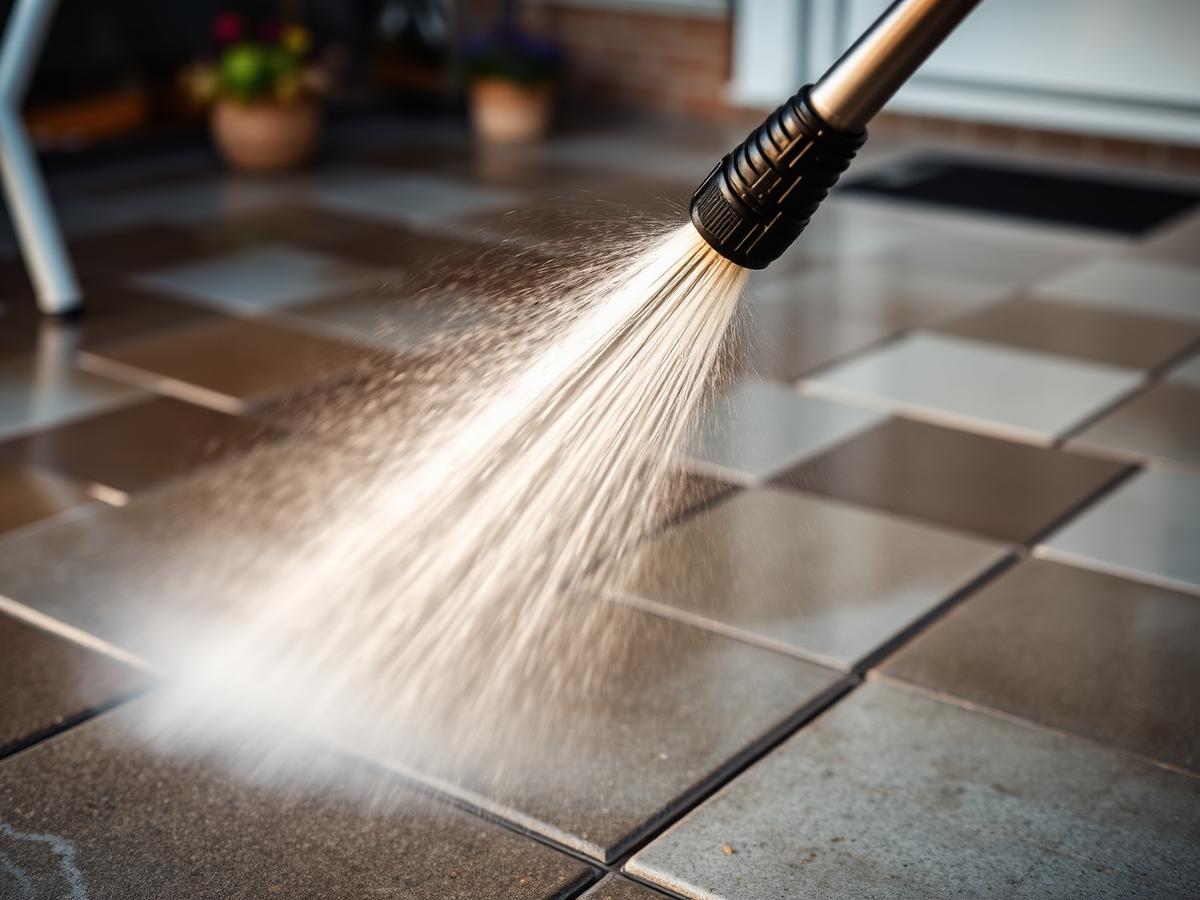
- Concrete tolerates cleaning better than most surfaces, but a turbo nozzle held close will still etch it and expose aggregate.
- Clean before repairing so you can see the true extent of the damage.
- A penetrating sealer reduces water absorption, which directly reduces freeze-thaw spalling — this is one of the most worthwhile preventative measures available.
- Seal only when the surface is fully clean, dry and repaired, not over crumbling material.
- Avoid rock salt on sealed and unsealed concrete alike; grit for traction does no chemical harm.
- Recoat the sealer when water stops beading, rather than waiting for visible deterioration.
When repair stops being the sensible option
If cracks show vertical displacement, if sections rock underfoot, or if extensive areas are spalling to any real depth, the slab or the ground beneath it has failed. Surface repairs at that point are money spent on symptoms.
A rough rule is to look at proportion and trend. A handful of patches on an otherwise sound slab is a maintenance job. Damage across a substantial share of the area, getting worse each year, points to replacement or a properly designed overlay.
Either way, deal with the drainage first. Replacing a slab without fixing the water that destroyed the last one gives you the same problem on a longer timescale.