
Winter is the season that does the structural damage, but the damage is mostly invisible until spring. Water gets into a joint, a crack or a pore, freezes, expands, and pushes the material apart very slightly. Then it thaws, more water gets in, and it happens again. A single winter in Yorkshire can put a surface through dozens of these cycles.
The practical implication is simple: winter driveway care is about keeping water out and being careful about what you put down, not about making the drive look its best. Deep cleaning belongs to spring.
Why freeze-thaw is the real enemy
Water expands as it freezes. In a saturated jointing sand, that expansion pushes upwards and outwards, loosening the joint. In a hairline crack in concrete, it widens the crack a fraction each cycle until pieces begin to spall off the surface. In a porous block that has taken on water, it can cause the face to flake.
This is why standing water is so much more damaging in winter than at any other time of year. A drive that ponds is a drive being repeatedly jacked apart from within. If you only fix one thing before winter, fix the drainage.
Before winter: the November checklist
- Clear gullies, channel drains and grates completely, and check that they still run when you pour a bucket down them.
- Sweep up the last of the leaf fall — wet leaf mats hold water against the surface all winter and stain as they rot.
- Top up any joints that have dropped, so the sand is high enough to shed water rather than hold it.
- Fill or have repaired any significant cracks in concrete before they take on water.
- Cut back overhanging growth so what light there is reaches the surface.
- Note where water sits after heavy rain; that is your spring priority list.
De-icers: what to use and what to avoid
Rock salt is cheap and effective at melting ice, but it is not kind to paving. It contributes to surface scaling on some concrete products, is corrosive to metalwork and vehicle underbodies, and the run-off is harmful to lawns and borders. On decorative paving in particular, it is worth avoiding.
Grit or sharp sand does not melt anything — it provides traction. On a domestic drive that is often all you actually need, and it does no chemical harm at all. The downside is that it leaves debris to sweep up in spring.
Paving-safe or urea-based de-icers cost more but are considerably gentler on the surface. If you have invested in a good drive, this is the sensible option.
Whatever you use, use less than you think. Over-application does not melt ice faster; it just increases run-off and residue.
What not to do in winter
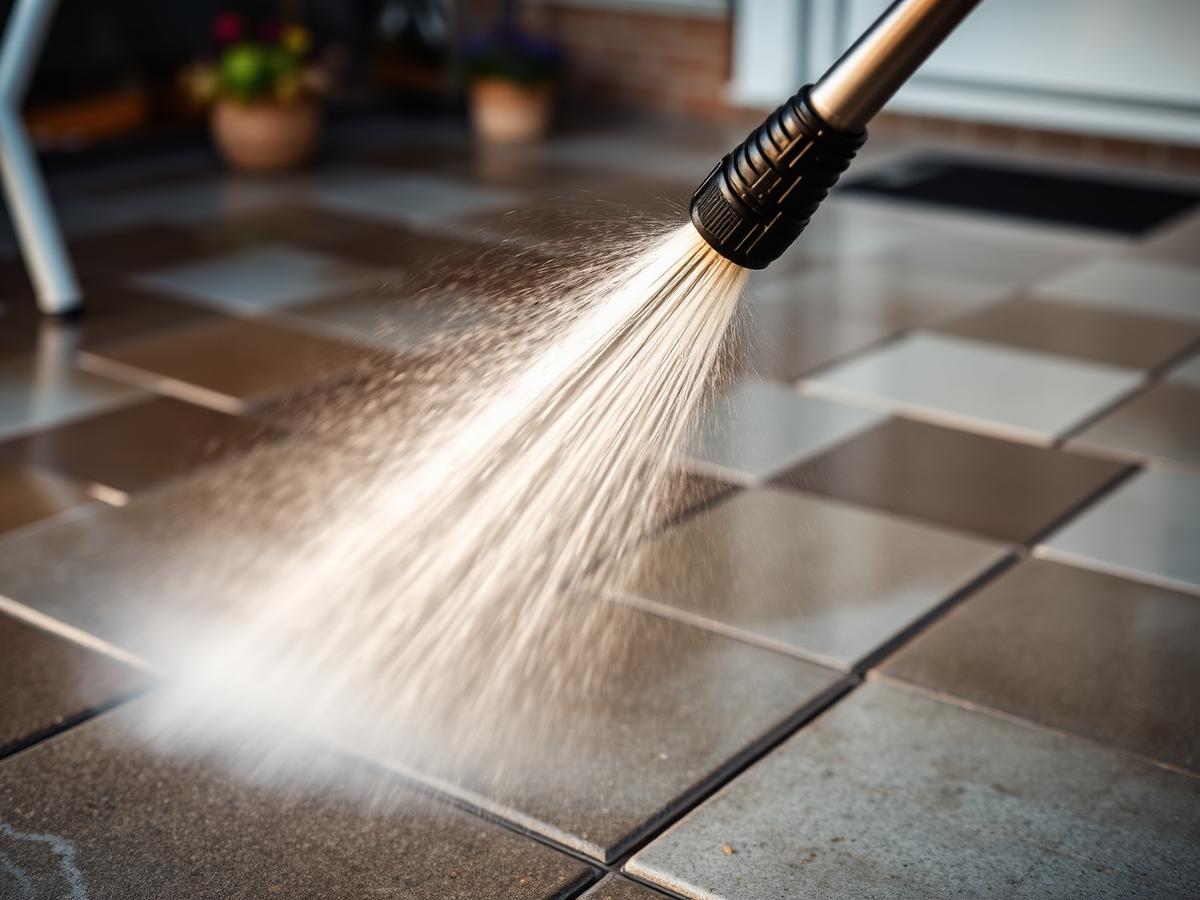
- Do not pressure wash in frost or when a frost is forecast. Water forced into joints and cracks then freezing will lift blocks and spall concrete.
- Do not apply a sealer. It will not cure properly in the cold and damp, and a failed coat has to be stripped.
- Do not pour hot water on ice; it refreezes rapidly into a smoother, more dangerous sheet and thermally shocks the surface.
- Do not use a steel shovel or spade edge on paving — plastic-edged snow shovels avoid chipping block arrises and flag edges.
- Do not chip at bonded ice with anything hard and pointed. Let a de-icer do the work.
- Do not leave a car parked in exactly the same spot all winter on a wet surface; it creates a permanently damp, algae-friendly footprint.
Surface-by-surface notes
- Block paving: joints are the vulnerable point. Keep them full, keep salt off, expect to re-sand in spring.
- Tarmac: relatively tolerant of frost, but potholes form where water has got into an existing crack. Seal cracks before winter rather than after.
- Concrete and imprinted concrete: most at risk of spalling, especially if the sealer has worn thin. Salt makes this considerably worse.
- Resin bound: keep the pores clear so meltwater drains through instead of freezing on the surface; avoid metal shovels which scuff the resin.
- Gravel: expect migration and scatter from ploughing or shovelling; rake it back and top up in spring rather than fighting it in January.
Winter is a good time to plan, not to clean
Use the winter months to watch the drive under load. Where does ice form first? Where does water linger three days after rain? Where does moss look darkest and thickest? These observations are far more useful than any inspection you could do in July, because winter exposes the drainage weaknesses that a dry surface conceals.
Then book the spring work early. Good weather windows in a Yorkshire March and April are genuinely limited, and the cleaning diary fills up quickly once the first warm weekend arrives.
The first mild spell: what to do and what to wait for
On the first mild, dry days, sweep off accumulated grit, salt residue and organic debris, and clear the drains again. That alone stops a lot of damage continuing.
Wait on everything else. The surface will still be holding a great deal of water, night frosts are still likely, and both re-sanding and sealing need a properly dry base. Cleaning too early gives a worse and shorter-lived result than waiting three weeks for a stable spell.