
Block paving does not fail all at once. It fails slowly, through a chain of small events: sand washes out of a joint, water gets in, a seed lands, a root widens the gap, the block loses its neighbour's support and starts to rock. Almost every rescue job we attend could have been an hour of routine work spread across a year.
This calendar is written for a Yorkshire climate — wet autumns, freeze-thaw winters, short dry spells. It assumes a normal domestic drive with cars on it daily, not a show surface. Nothing here needs specialist kit beyond a stiff brush, a bag of kiln-dried sand and a bit of attention at the right moments.
Late winter (February): assess, do not scrub
Resist the urge to attack the drive on the first dry February day. The surface is cold, joints are saturated, and any sand you brush in now will simply sit wet and slump. This is an inspection month.
Walk the drive and note three things: where water stands after rain, where blocks feel loose underfoot, and where joints are visibly empty. Those three maps tell you everything you need to plan the year. Standing water almost always explains where the worst growth appears later.
Spring (March to May): the main clean window
- Book or carry out the deep clean once night temperatures are reliably above freezing.
- Treat with a biocide first and let it dwell — killing growth is a separate job from washing it off.
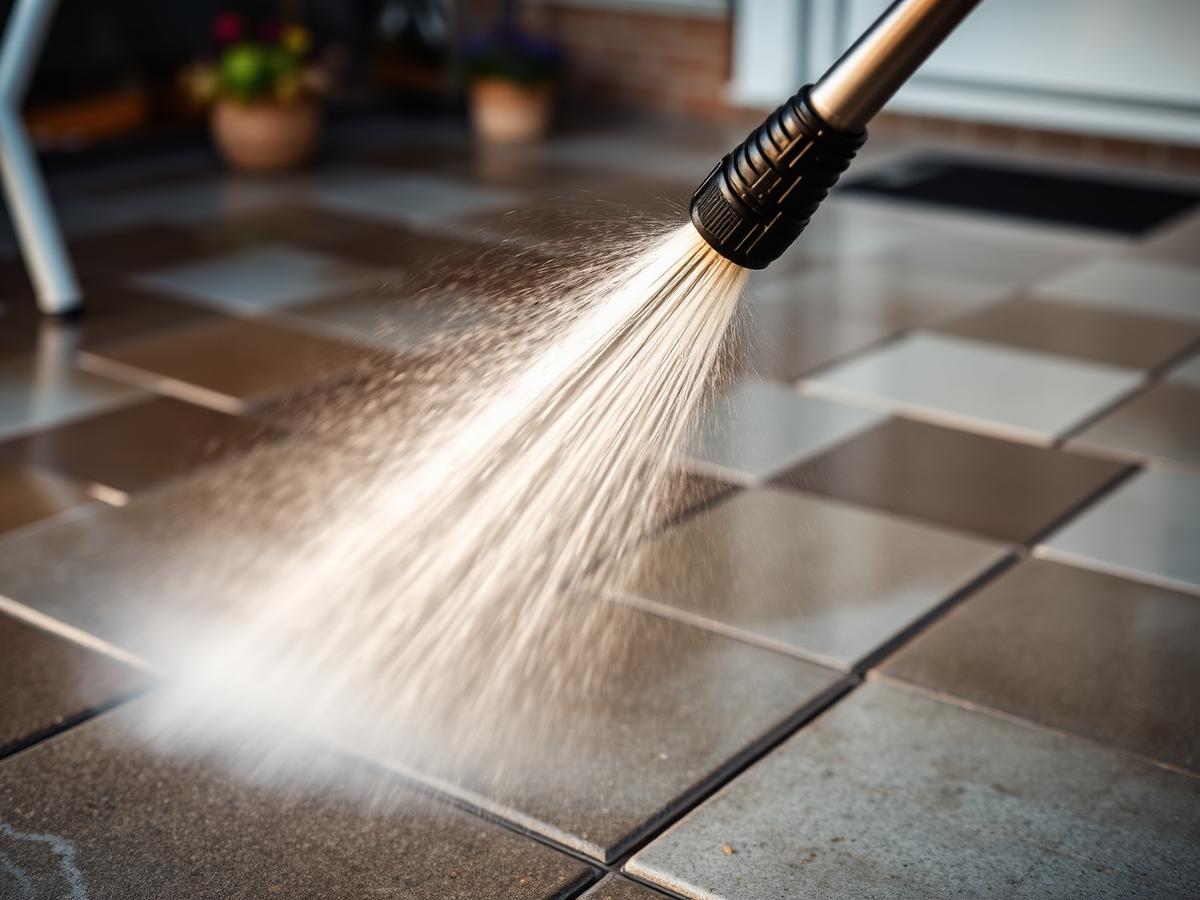
- Use a rotary flat-surface cleaner on the open field of the paving, not a bare lance, to avoid striping.
- Re-sand with kiln-dried sand only when the surface and joints are dry, otherwise the sand bridges and never reaches the bottom.
- Brush the sand diagonally across the joints in several passes rather than one heavy sweep.
- Firm the sand down by driving on the drive normally for a week, then top up the joints that have dropped.
Early summer (June to July): weeds and edges
Whatever survives spring will show itself now. Deal with weeds while they are small and shallow — a hand tool along the joint removes the root, whereas a strimmer or a jet wash just decapitates the plant and blasts more sand out of the joint.
Check the edge courses and any haunching. Edges take the most punishment because that is where tyres overrun and where mower wheels drop. A single loose edge block will let the whole row migrate outwards over a wet winter.
This is also the sensible sealing window if you are sealing at all. The surface is at its driest, the joints have settled after spring re-sanding, and there is enough warmth for the coating to cure properly.
Late summer (August): the quiet month
- Rinse off any oil or fuel drips before they get baked in — fresh spills lift far more easily than old ones.
- Top up any joints that have dropped since spring; a bag of sand and twenty minutes is enough.
- Trim back overhanging shrubs so the paving gets airflow and light, which does more to slow algae than any product.
- Check that gullies and channel drains are clear before the autumn rain arrives.
Autumn (September to November): the critical season
Autumn does more damage to block paving than winter does. Leaf litter is the culprit. Wet leaves sit in the joints, break down into a fine organic mulch, and become a perfect seed bed. They also stain — tannins from beech, oak and sycamore leave brown shadows that outlast the leaf by months.
Sweep weekly through leaf fall. It is the single highest-value maintenance habit for paving and it costs nothing. If you do only one thing on this calendar, do this one.
Clear drainage repeatedly rather than once. A gully that blocks in October means standing water for the entire winter, and standing water is what turns light algae into thick black growth.
Winter (December to January): protect, do not clean
- Avoid rock salt where you can — it is hard on jointing and can accelerate surface pitting on some blocks. Grit or a paving-safe de-icer is kinder.
- Do not jet wash in frost. Water forced into a joint and then frozen is a reliable way to lift a block.
- Shovel snow with a plastic-edged shovel rather than a steel one to avoid chipping arrises.
- Note where ice forms first — that is almost always where water is not draining, and it is your first job for spring.
The two habits that matter most
If the calendar feels like a lot, reduce it to two habits. First, keep the joints full — sand is the structural element of block paving, not a cosmetic filler, and every millimetre of missing sand is load transferred badly. Second, keep water moving off the surface, because almost every problem we are called out to fix is a drainage problem wearing a different hat.
Do those two things and a professional deep clean becomes a periodic refresh rather than a rescue.