
There is a persistent belief that driveway weeds push up from the soil beneath the paving. On a correctly built drive with a compacted sub-base and a laying course, almost nothing does. What actually happens is that airborne seed lands in the joints, finds a bed of decomposed organic debris and trapped moisture, and germinates in the top few centimetres.
That distinction matters, because it means weed control on paving is really joint management. Keep the joints full, dry and free of organic material and you remove the growing medium. Everything else — weedkiller, burning, hand-pulling — is dealing with symptoms.
Why weeds appear where they do
Look at where the weeds are on your drive and you will usually find a pattern. They cluster along shaded edges, beneath overhanging shrubs, where water stands after rain, along the joint next to a lawn, and anywhere the sand has washed out. All of these are places where organic matter accumulates and stays damp.
Open, sunny, well-drained sections of the same drive are frequently almost weed-free. Nothing different was done to them. They simply never became hospitable.
The foundation: full joints
- Kiln-dried sand should sit close to the top of the joint, not halfway down. A half-empty joint is a planter.
- Re-sand after any deep clean, without exception — cleaning removes sand, and leaving it out is how a clean makes the weed problem worse.
- Apply sand when both the paving and the sand are dry, and brush diagonally in several light passes.
- Let traffic settle the sand for a week, then top up. One application is rarely enough.
- Check joints at the start of each season and top up where they have dropped.
Polymeric sand and sealing: what they really do
Polymeric sand binds into a semi-solid joint when activated with water, which resists washout and makes germination much harder. It is genuinely effective, but it is unforgiving: it must go into dry joints, be cleared completely off the surface before activation, and be watered exactly as the manufacturer specifies. Get it wrong and you get a haze on the paving that is miserable to remove.
Sealing a re-sanded drive stabilises the sand at the surface, so wind and rain stop excavating the joints. This is one of the most under-appreciated benefits of sealing and, for weed-prone drives, often the main reason to do it.
Neither approach is a permanent end to weeding. Both convert it from a recurring chore into an occasional one.
Drainage and light: the unglamorous fixes
- Clear gullies and channel drains before autumn. Standing water is the single biggest predictor of weed and algae pressure.
- Cut back overhanging shrubs and low branches — airflow and sunlight dry the surface, and a dry joint is a poor seed bed.
- Fix the low spot where water always sits, even if it means lifting and relaying a small area. It pays for itself.
- Keep soil and mulch from garden borders off the paving edge; that migration seeds the nearest joints every year.
- Sweep through leaf fall weekly. Decomposed leaf litter in a joint is compost, and it is where next year's weeds will grow.
Removal methods compared
Hand weeding with a joint knife is slow but the most complete, because it removes the root and lets you re-sand behind it immediately. For a small drive done regularly, it is genuinely the best method.
Contact weedkillers kill top growth quickly and cheaply but leave the root and the dead organic matter in the joint, which then feeds the next generation. Systemic products go further but need the plant to be actively growing to work.
Thermal weeding — hot air or flame tools — is chemical-free and works well on seedlings. It struggles with established taproots and needs repeat visits. Keep it well away from resin, tarmac, plastic edging and anything sealed.
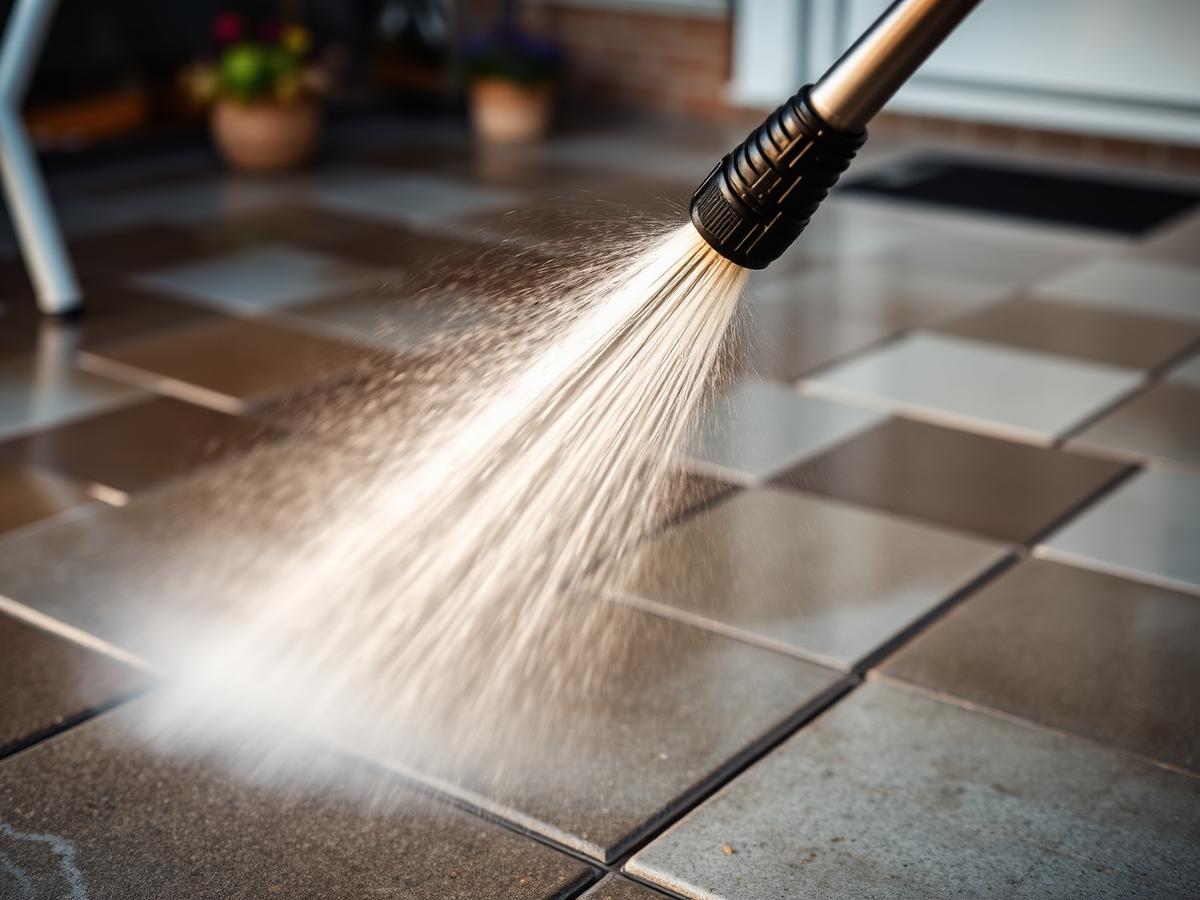
Jet washing weeds out is satisfying and counterproductive: it removes the plant and a good proportion of the joint sand with it, leaving a wider, emptier joint than before. If you do it, treat re-sanding as part of the same job.
A realistic yearly routine
- Spring: deep clean with a biocide dwell, then a full re-sand once dry, then top up a week later.
- Early summer: hand-weed anything that appears while it is still shallow; re-sand behind it.
- Midsummer: consider sealing on a dry, settled surface if joint washout is a recurring problem.
- Autumn: sweep weekly through leaf fall, clear drains, top up dropped joints.
- Winter: leave it alone, avoid heavy salt, and note where ice forms for next spring's drainage list.
When weeding is not the real problem
If weeds return within weeks of a thorough treatment, or if they are growing through the middle of blocks rather than the joints, the issue is likely structural. A failed sub-base, a collapsed edge restraint or a persistent water ingress point creates conditions no surface treatment will fix.
In that situation, cleaning and re-sanding buys time but not a solution. It is worth having the affected area looked at properly before spending repeatedly on treatments that address the wrong layer.