
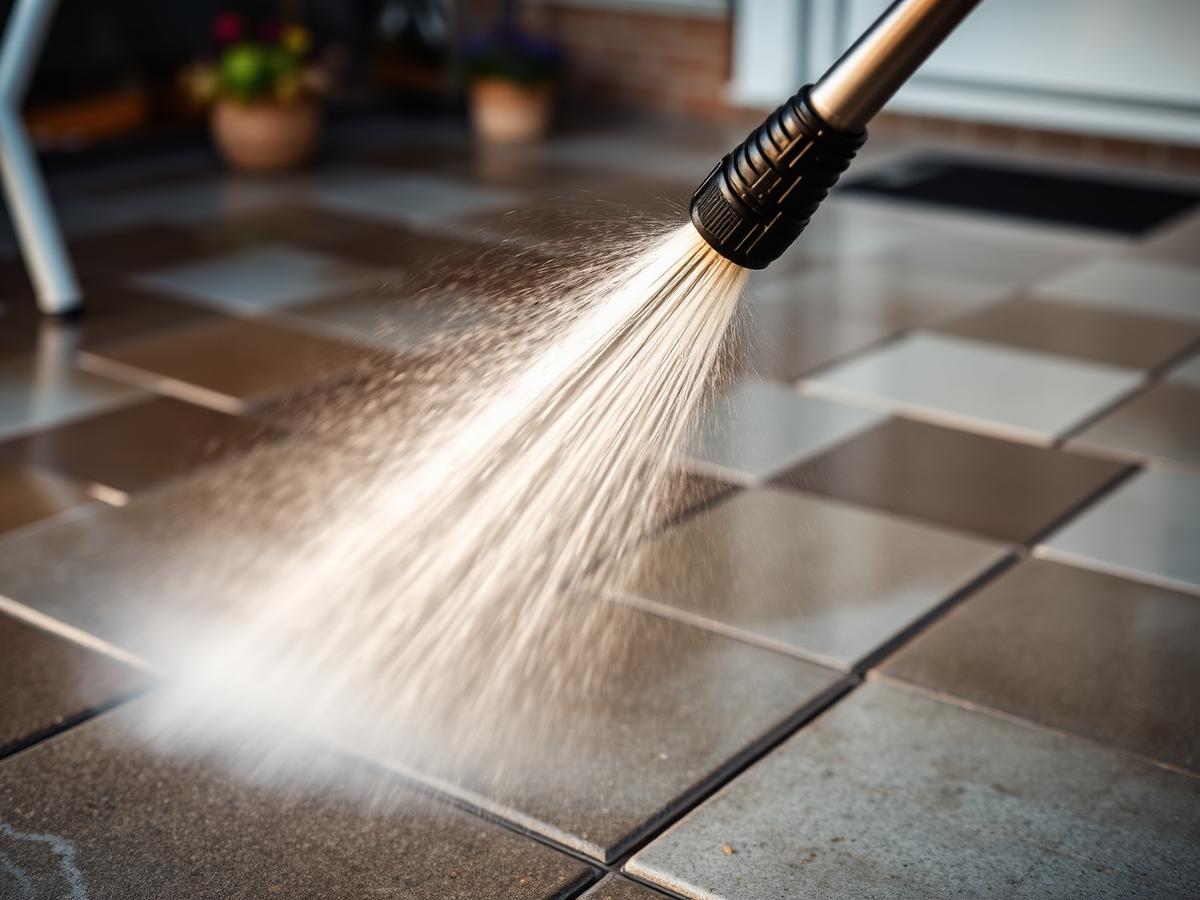
We're not going to pretend every surface needs a professional. A small, lightly greened concrete path and a domestic washer is a fine Saturday. The problem is that people apply the same approach to surfaces where the risk is real.
DIY is usually fine for
- Small concrete paths and steps with light surface algae.
- Rinsing a porcelain patio that just needs the winter film off.
- Keeping on top of a surface that's already been professionally cleaned and re-sanded.
Think twice on
- Imprinted concrete — the colour and sealer are the surface, and a domestic lance strips both.
- Resin-bound — dislodged aggregate can't be put back.
- Old or riven natural stone with soft or lime pointing.
- Softwood decking, where a lance raises and tears the grain.
- Any large block-paved drive, because you'll strip the joint sand and then need to re-sand the whole thing properly anyway.
The three common DIY mistakes
First, cleaning without treating. The green comes back by the following season because the biology was never killed.
Second, striping. A hired lance on a large open surface almost always bands, and it's very visible from a first-floor window.
Third, sand loss. Blasting joints out of block paving is easy and quick; getting the joints properly refilled and settled is neither.
Our promise
100% satisfaction — or we re-clean free.