
Most comparisons of resin and tarmac are written by people who install one of them. This one is written by people who clean both, years after installation, which is a different and often less flattering vantage point. We see how each surface behaves once the guarantee period is a memory.
Neither is objectively better. They fail in different ways, on different timescales, and the right choice depends far more on your drainage, your tree cover and how you use the drive than on the material itself.
How each surface is built
Tarmac — properly, bituminous macadam — is aggregate bound in bitumen, rolled hot onto a compacted base. It cures as it cools and remains slightly flexible for its whole life. That flexibility is why it copes with minor ground movement and why it deforms under sustained point loads.
Resin bound is aggregate mixed with a clear polymer resin and trowelled onto a rigid base, usually tarmac or concrete. Every stone is coated and the mix is laid porous, so water passes through the surface rather than running off it. It is a wearing course, and it inherits the strengths and weaknesses of whatever it was laid over.
How they weather over five to ten years
- Tarmac fades from black to grey as the bitumen oxidises. This is normal, not a defect, and it is the main reason tired tarmac looks worse than it performs.
- Tarmac softens in prolonged heat, so trailer jockey wheels, motorbike stands and caravan legs can leave permanent dimples.
- Tarmac loses fines at the surface over time, exposing more aggregate and giving a rougher, looser feel.
- Resin holds colour far better because the aggregate itself is the colour, though the resin binder can amber slightly with UV exposure.
- Resin's porosity is its weak point over time: if the pores clog with silt and organic debris, water stops draining through and the surface starts holding moisture and growing algae.
- Resin can develop localised stone loss at the edges or where the base beneath it has moved.
Cleaning: what each surface tolerates
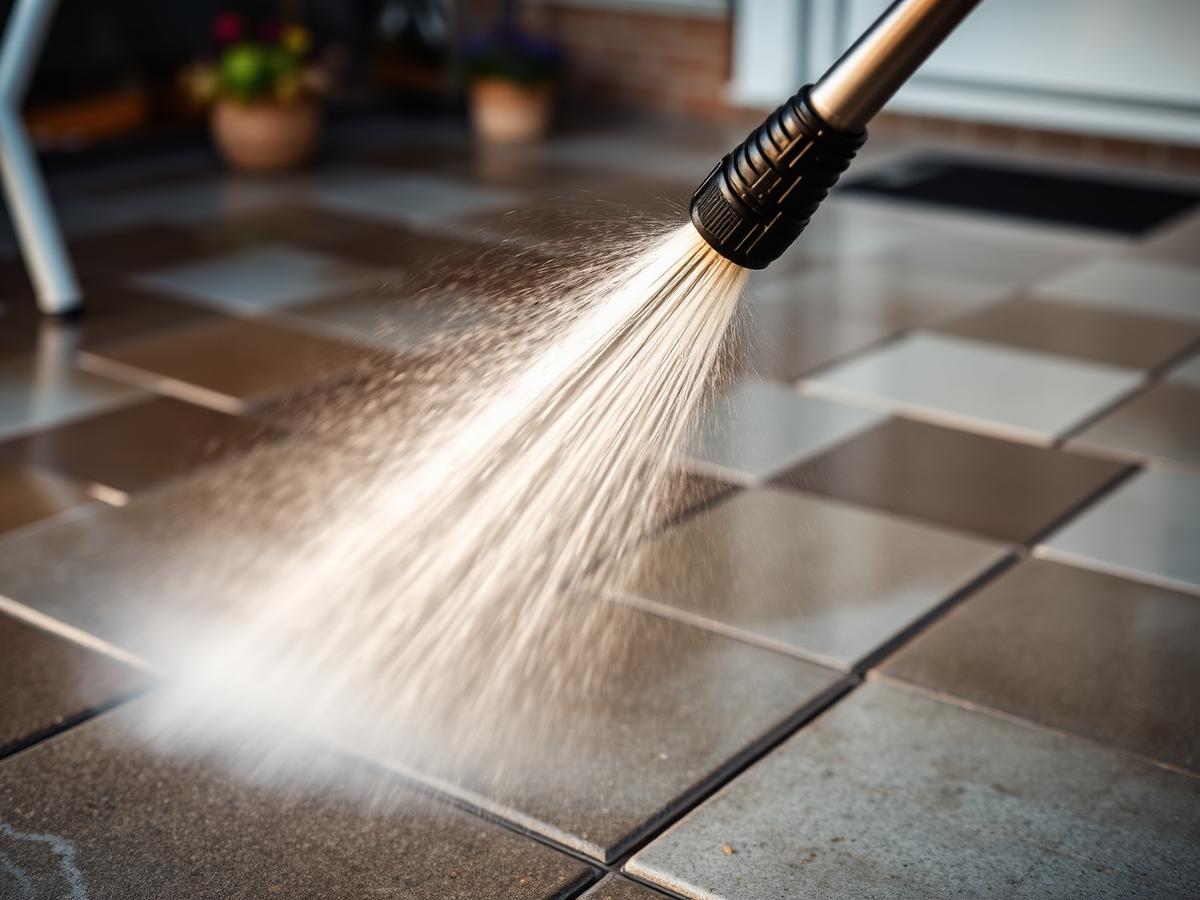
Tarmac tolerates a straightforward wash but not aggression. Too much pressure held in one place will lift the fines and open the surface, and once you have scoured a patch it is visible forever. We work tarmac with moderate pressure through a rotary head, keeping the machine moving, and lean on biocide dwell time rather than force.
Resin is more delicate than people expect. High pressure directed into the surface can knock stones out of the matrix, and the damage looks like a scattering of small bald patches. It needs a wide fan, controlled pressure and, more than anything, a proper flush to clear the pores. Getting the drainage working again is usually more transformative than getting the colour back.
Neither surface should ever be cleaned with a bare lance held close and static. That is how you turn a cleaning job into a repair job.
Typical failure modes we get called to
- Tarmac: fuel and oil drips softening the bitumen into a sticky, sunken patch — this is chemical damage, not dirt, and cleaning will not reverse it.
- Tarmac: edge crumbling where there is no restraint, and moss colonising the crumbled strip.
- Tarmac: potholes where the base has failed, which cleaning cannot address.
- Resin: surface blinding, where silt fills the voids and the drive begins ponding despite being a permeable system.
- Resin: algae in perpetually shaded sections, which spreads faster than on tarmac because the porous texture holds moisture.
- Resin: delamination from the base in isolated areas, usually where water got underneath.
Maintenance burden, honestly compared
Tarmac asks for less frequent attention but has a lower ceiling — you can clean it and it will look tidy, but a faded, twenty-year-old tarmac drive will still look its age. Some owners choose to have tarmac restored with a bitumen-based colour restorer, which is a legitimate option but is a coating with its own maintenance cycle, not a permanent fix.
Resin asks for more regular, gentler attention: keeping leaf litter off it, clearing the pores, and treating algae early. In return it stays looking closer to new for longer, provided the base under it was done properly. When resin does go wrong, repairs are more specialist and colour-matching a patch is genuinely difficult.
The deciding factor for most people is not the material but the setting. Under heavy tree cover with poor drainage, resin's porosity turns from an asset into a maintenance liability. On an open, well-drained front drive it keeps its appearance impressively well.
Which one to choose if you are laying new
- Choose tarmac if the drive is long, budget matters, the ground has a history of movement, or heavy vehicles use it occasionally.
- Choose resin if appearance is the priority, drainage is already good, and you accept a routine of sweeping and periodic flushing.
- Whichever you choose, spend the money on the base and the edge restraint. Almost every failure we see began below the surface.
- If tree cover is heavy, plan the drainage around leaf litter, not just rainfall.