
Permeable paving looks much like conventional block paving, and that resemblance causes most of the problems it suffers. Many were installed to satisfy planning requirements on front gardens, and the owners were never told that the surface works differently and needs different care.
In a permeable system, water is meant to pass down through wide, grit-filled joints into an open-graded sub-base that stores it and releases it slowly. The joints are not cosmetic and they are not conventional jointing — they are the inlet to a drainage structure. Everything about maintaining these surfaces follows from that.
How to tell if your paving is permeable
- The joints are noticeably wider than conventional block paving, often with spacer nibs on the block edges.
- The joints are filled with small angular grit rather than fine kiln-dried sand.
- There may be no gullies or channel drains, because the surface is not designed to shed water.
- Water poured onto the surface disappears through it rather than running to a low point.
- Front garden drives installed under permeable paving planning requirements are usually of this type.
- If in doubt, tip a bucket of water on it: a working permeable surface takes it away in seconds.
How they clog
The enemy is fines. Silt washed off adjacent soil, decomposed leaf litter, moss debris, tyre-carried grit and general airborne dust all work into the top of the joint. Over time this forms a blinding layer that seals the surface as effectively as a coat of mortar would.
The clogging is almost always in the top few centimetres of the joint, not in the sub-base. That is good news, because it means the fix is a surface operation rather than an excavation.
Clogging accelerates dramatically where there is bare soil, a mulched border or a lawn draining onto the paving. Any point where a slope carries soil onto the drive will show as a visibly faster-clogging patch.
The mistake that kills them
The single most damaging thing done to permeable paving is filling the joints with kiln-dried sand or, worse, polymeric sand. Both are the correct materials for conventional paving and both are catastrophic here, because they block the very void the system depends on.
This most often happens when a well-meaning contractor cleans the drive and re-sands it as a matter of routine. The surface looks immaculate and, from that day, water sits on it. If your permeable drive started ponding shortly after a clean, this is almost certainly what happened.
The correction is to rake out the wrong material from the joints and recharge with the specified angular jointing grit. It is laborious but it does restore the system.
Cleaning and recharging correctly
- Remove the top layer of clogged material from the joints — specialists use suction, but a joint rake works on a domestic scale.
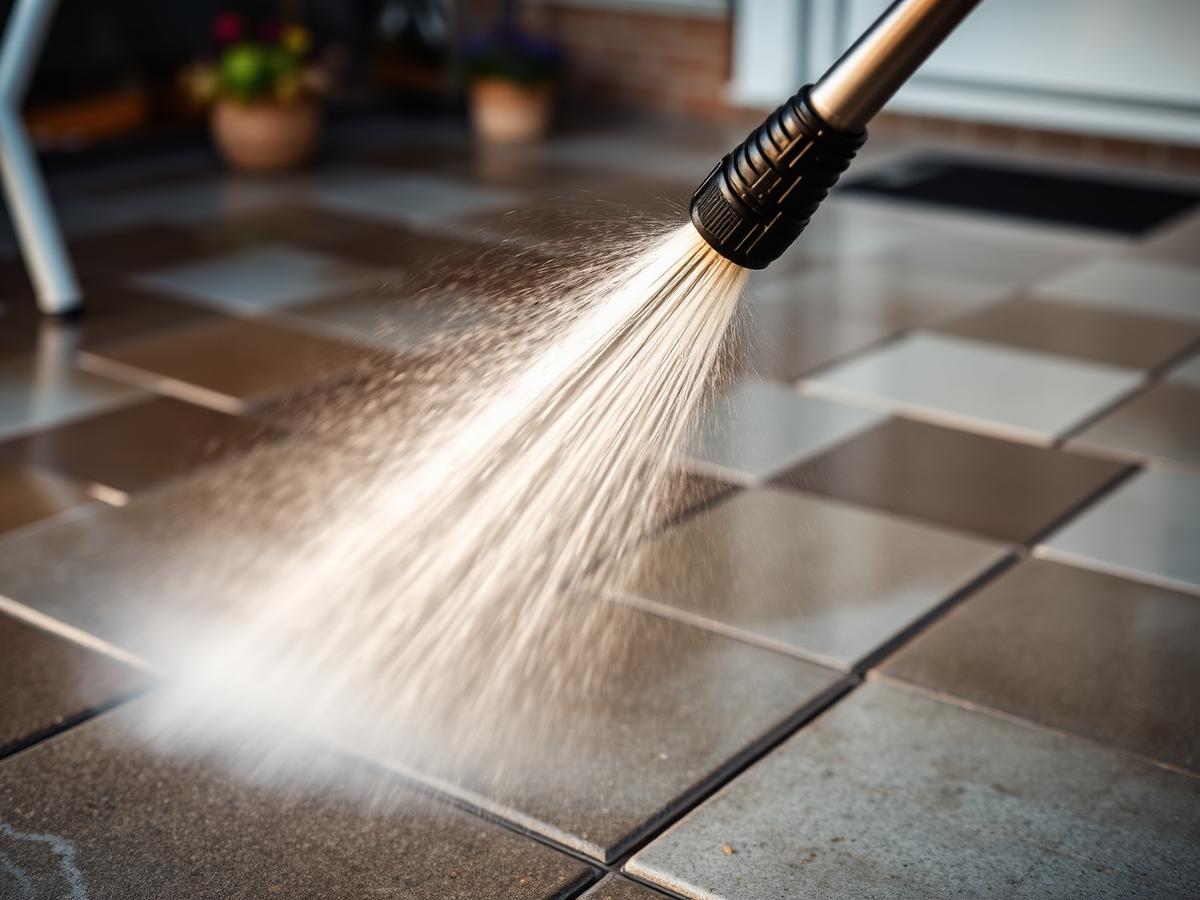
- Wash the surface with moderate pressure, taking care not to drive fines deeper into the joint.
- Do not use a lance held close into the joints; you will push the blinding layer downwards where it is much harder to remove.
- Recharge the joints with the correct grade of angular grit specified for the system, never fine sand.
- Brush in, then check infiltration with a bucket of water before calling it finished.
- Repeat the joint recharge periodically as material is inevitably lost.
Testing that it still works
A simple bucket test tells you most of what you need to know. Pour a measured volume onto a representative area and time how long it takes to disappear. Do this at installation if you can, and repeat annually — the trend matters more than any absolute number.
Test in several places, particularly next to borders and at the bottom of any slope, because clogging is rarely uniform. It is common to find one zone doing almost nothing while the rest is fine.
If water disappears quickly in most places but stands persistently in one patch after a joint recharge, the issue may be deeper in the sub-base or in the geotextile, which is a different and more involved conversation.
Preventing clogging in the first place
- Sweep regularly, particularly through autumn leaf fall — decomposing organic matter is the main source of fines.
- Keep soil, compost and mulch from washing off borders onto the paving; a physical edge helps a great deal.
- Do not store aggregate, sand or soil on the surface, even briefly.
- Divert downpipes and any concentrated water source that carries silt onto the drive.
- Deal with moss early, since moss debris breaks down into exactly the fine organic material that blinds the joints.
- Never seal a permeable surface — a coating defeats the entire drainage function.
Why keeping it working matters beyond puddles
Permeable paving is frequently a condition of planning permission for a front garden, and the system existing but not functioning is not the same as a compliant, working surface. It also carries a real practical benefit: water that goes into the ground on your property is water that is not running into the street or towards your house.
A clogged permeable drive is worse than a conventional one, because it has no gullies or falls to move the water it can no longer absorb. That is how a drive that drained perfectly for years starts sending water towards a doorway.